

Welcome to the PMO Strategies Podcast + Blog, where PMO leaders become IMPACT Drivers!
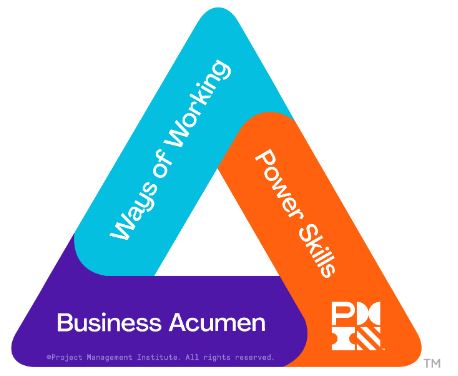
PMI Talent Triangle: Business Acumen
Industry benchmarking has become one of the most persuasive tools in executive conversations. When research is cited, the discussion shifts from opinion to comparison. That shift feels safer. It feels defensible.
But benchmarking is not strategy. It is context.
In Episode 350 of the PMO Strategies Podcast, we examine how benchmarking quietly derails performance when it replaces disciplined strategic thinking.
Why Benchmarking Is Politically Powerful
Benchmarking carries authority. When leaders cite “top-performing organizations,” friction decreases. The recommendation feels validated.
It also reduces accountability.
If the decision underperforms later, it can be defended as aligned with industry standards. That political insulation makes benchmarking attractive.
The problem begins when belief precedes inquiry. A leader decides stronger governance is required or concludes the organization is not mature enough. Research is then gathered to validate that position.
Strategic thinking asks what constraint is limiting performance. Justification asks who else is doing it.
That distinction determines whether benchmarking informs judgment or replaces it.
The Maturity Model Obsession
Maturity models create a visual hierarchy. Level 1 through Level 5. Higher appears superior.
Organizations often pursue maturity advancement as a signal of progress. Additional governance boards are introduced. Reporting cadence increases. Intake processes formalize.
The maturity assessment improves. Execution does not.
Executives continue shifting priorities reactively. Tradeoffs remain informal. Funding bypasses governance mechanisms.
The structure matures. Behavior does not.
Maturity without measurable IMPACT is optics.
Complexity Without Capability
There is a structural law in organizational design. Complexity must match capability.
When complexity exceeds capability, systems become fragile. Compliance increases while engagement declines. Meetings occur, but decisions remain unchanged. Dashboards exist without influencing behavior.
Benchmarking often accelerates complexity because it highlights visible architecture in high-performing organizations.
What it does not reveal is invisible discipline.
Executive alignment. Cultural norms. Investment logic.
Organizations replicate form without replicating function. That creates friction.
Where Benchmarking Quietly Derails Performance
Industry-only benchmarking interferes in three specific ways.
First, it masks strategic ambiguity. Governance design cannot compensate for unclear priorities.
Second, it creates artificial targets. “We need to be top quartile.” Quartile ranking is comparative. Business value is absolute.
Third, it encourages copying instead of designing. High-performing organizations design systems around their constraints. Copying imports complexity without necessity.
Context determines effectiveness. Not popularity.
The Disciplined Use of Benchmarking
Benchmarking is useful when used correctly. It can expose patterns. It can highlight tradeoffs. It can reveal blind spots.
But it must follow contextual clarity. Before reviewing benchmarks, define:
- What problem are we solving?
- What constraint limits performance?
- What behaviors must change?
-
What capability realistically exists today
Then evaluate industry patterns against that context. A disciplined test clarifies direction.
If the benchmark did not exist, would the decision still make sense?
If not, comparison may be replacing judgment.
High-performing organizations do not copy their way into excellence. They design intentionally. They align governance to strategy. They align process to capability. They align structure to measurable IMPACT.
▶ Press play above to learn how to design governance systems for measurable IMPACT instead of optics.
P.S. If you are ready to design governance systems around measurable IMPACT instead of maturity optics, the IMPACT Engine System™ provides the structured discipline. Learn how to implement a strategy that makes a measurable IMPACT.

 Hey there, IMPACT Driver!
Thanks for taking the time to check out our podcast and blog.
I welcome your feedback and insights!
I’d love to know what you think and if you love it, please leave a rating and review in your favorite podcast player.
You can also complete this survey to tell us more about you and get my advice on how to take your next steps toward high-IMPACT!
Warmly,
Laura Barnard