
Welcome to the PMO Strategies Podcast + Blog, where PMO leaders become IMPACT Drivers!
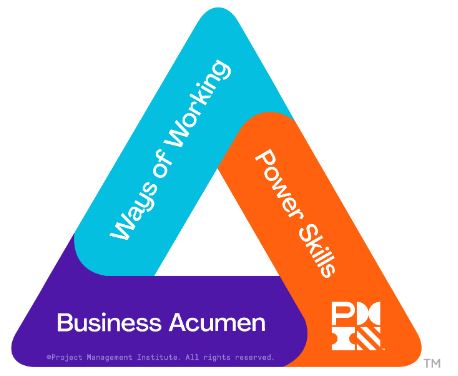
PMI Talent Triangle: Power Skills
Most PMO and transformation leaders face the same painful paradox: they’re working harder than ever, yet executives still don’t see their value.
You’re drowning in meetings, status reports, dashboards, and escalations. So much motion. So much effort. And yet, you still hear questions that cut to the bone:
“What is the PMO actually doing?”
“Why are we funding this initiative?”
“How does this connect to our strategy?”
If you’ve experienced this disconnect, you’re not alone. And more importantly, you’re not failing. The real issue is clarity or the lack of it.
The Questions That Change Everything
There are three deceptively simple questions that separate project administrators from strategic business partners. They might sound basic at first, but these questions fundamentally change the quality of your conversations and how stakeholders experience you as a leader.
Those questions are:
- What are we doing?
- Why are we doing it?
-
What does success look like
These aren’t just good questions to ask occasionally. They’re leadership questions that should anchor every conversation, every initiative, and every decision your PMO touches. They’re foundational to how we teach strategy delivery inside the IMPACT Engine Practitioner program.
Question One: What Are We Doing?
At first glance, this question seems obvious. But here’s the problem: most teams answer it at the wrong level.
They say things like “We’re implementing a new tool” or “We’re building a dashboard” or “We’re standardizing the process.”
That’s not what you’re doing. That’s how you’re doing it.
When you ask “What are we doing?” as a leader, you’re really asking: What problem are we solving? What capability are we building? What decision is this enabling?
This distinction matters tremendously for PMO alignment. When you can clearly articulate what you’re doing in business terms, you stop sounding like an order taker and start sounding like a strategist.
Instead of saying “We’re rolling out portfolio reporting,” you say “We’re creating visibility so executives can make better investment decisions.”
Same work. Completely different perception.
This is where PMOs start to align to strategy not by changing the work itself, but by changing the way the work is framed. You’re anchoring execution to business intent from the very first conversation.
Question Two: Why Are We Doing It?
This is the most powerful question and often the most uncomfortable.
Because it exposes misalignment instantly.
If the answer to “Why are we doing it?” is “Because leadership asked for it” or “Because we’ve always done it” or “Because it was approved last year,” you don’t have alignment. You have inertia.
Strategic PMO leaders use this question to anchor work to business goals. The answer should connect directly to things executives genuinely care about: revenue, risk, speed, capacity, customer experience, or strategic priorities.
Here’s what happens when you consistently ask this question: Your conversations stop being about delivery mechanics and start being about business tradeoffs.
That’s when executives lean in. That’s when they stop seeing you as the person who tracks the work and start seeing you as the person who helps decide which work matters most.
This is one of the clearest signals that a PMO is strategy aligned. You’re not just executing what you’re told you’re helping shape what gets done and why it matters.
Question Three: What Does Success Look Like?
Most teams define success as on time, on scope, and on budget. That’s project management.
Leadership is different.
When you ask, “What does success look like?” as a PMO or transformation leader, you’re asking: What will be different in the business? What decision will be easier? What outcome will improve?
This is how PMOs move from activity to value delivery.
Because here’s the uncomfortable truth: You can deliver everything you promised and still fail to deliver value.
When you define success in outcome terms, you accomplish several critical things. You align expectations early, prevent scope churn, anchor decisions to business IMPACT, and give executives confidence that you’re focused on results rather than just output.
This is one of the fastest ways to build credibility. Because now you’re not reporting progress, you’re reporting IMPACT.
The Strategy Alignment Shift
When you consistently use these three questions together, something powerful happens.
Your PMO stops being seen as a reporting function, a governance layer, or a process police force. Instead, you start being seen as a strategy enabler, a business partner, and a decision support function.
This is the moment where alignment clicks.
Because alignment isn’t about having the right template. It’s about having shared clarity across the organization.
When you ask what are we doing, why are we doing it, and what does success look like, you are aligning work to strategy, execution to outcomes, and effort to value.
This is exactly the mindset shift we build inside the IMPACT Engine Practitioner program. Not more tools. Not more documentation. Better thinking, applied consistently.
How This Fits the IMPACT Engine System
These three questions aren’t standalone concepts. They’re woven directly into the IMPACT Engine System™.
In Assess, you use them to uncover stakeholder priorities and pain points.
In Define, you use them to design services that solve real business problems.
In Plan, they become the backbone of your business plan tying services to outcomes and value, not just creating another charter.
In Deliver and Evolve, they keep you aligned as conditions inevitably change.
This is why people who succeed in the Practitioner program aren’t just better PMO leaders they’re better business leaders. They think differently. They communicate differently. And the organization responds differently.
Start With Better Questions
If you want your PMO to align to strategy, you don’t start with a roadmap. You start with better questions.
If you want to drive business value, you don’t work harder. You work more intentionally.
And if you want to be seen as a leader rather than an administrator, you have to lead the conversation, not just the execution.
Start with these three questions:
- What are we doing?
- Why are we doing it?
-
What does success look like?
👉 Press play above to hear the full story and discover how these questions can transform your approach to PMO leadership and strategy alignment.
P.S. If you’re ready to become the strategy navigator your business needs, the IMPACT Engine Practitioner Certification gives you the coaching, tools, and step-by-step framework to make it happen. This live online workshop runs for four half-day sessions: February 11-12 and 18-19, 2026. Learn more and register now!
 Hey there, IMPACT Driver!
Thanks for taking the time to check out our podcast and blog.
I welcome your feedback and insights!
I’d love to know what you think and if you love it, please leave a rating and review in your favorite podcast player.
You can also complete this survey to tell us more about you and get my advice on how to take your next steps toward high-IMPACT!
Warmly,
Laura Barnard