
Welcome to the PMO Strategies Podcast + Blog, where PMO leaders become IMPACT Drivers!
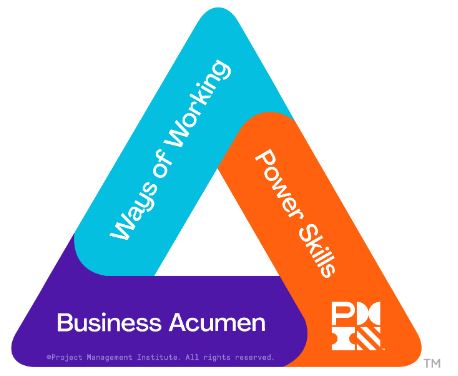
PMI Talent Triangle: Business Acumen
You’ve Been Sold a Lie About PMO Charters
Let me guess.
Someone told you that starting a PMO means writing a charter. So you downloaded a template, filled in the blanks, and got executive sign-off. You thought, Great, we’re official.
But a few months later, your stakeholders still don’t understand your value. Your team is chasing projects with no clear IMPACT. And you’re defending a document that no one’s read since the day you distributed it.
Sound familiar?
Here’s what nobody tells you: Starting with a charter is setting yourself up for failure.
The Fatal Flaw of the Traditional Approach
The typical advice goes something like this:
-
- Define your PMO’s purpose and mission
- Establish a vision statement
- Outline your scope
- List objectives and key results
- Identify key stakeholders
- Estimate resource needs
- Create a phased implementation roadmap
- Define success criteria and KPIs
-
Secure executive sign-off
Sounds logical, right?
Here’s the problem: This is all happening way too early.
You’re being asked to define purpose, value, relationships, and metrics before you’ve done a single stakeholder interview. You’re committing to structure before you’ve done the discovery.
It’s strategy in a vacuum.
And when you guess what matters to the business instead of discovering it, you miss the mark. That’s how PMOs get stuck in administrative work. That’s how leaders start wondering, “What does the PMO actually do?” That’s how trust erodes.
What Successful PMOs Do Differently
Instead of jumping into a charter, successful PMOs follow a system. One that emphasizes discovery first and design second.
Here’s the better approach—the six stages of the IMPACT Engine System™:
Stage 1: Mindset
You shift how you think about your role — from project tracker to strategy navigator. You stop chasing templates and start asking, “What business problem am I solving?”
Stage 2: Assess
You talk to stakeholders. You listen to what’s really not working. You gather their language, their pain points, their desired outcomes. This is how you build trust.
Stage 3: Define
You identify the root causes of those pain points. You don’t just list symptoms — you diagnose. Then you design the services that will solve real problems.
Stage 4: Plan
Now — and only now — you create your business plan. Not a charter. A business plan. One that shows what services you’ll offer, what problems they’ll solve, what outcomes they’ll drive, and how they’ll be phased in over time.
Stage 5: Deliver
You roll out one of those services in a focused way — an MVP. You co-create it with stakeholders. You test, learn, adjust.
Stage 6: Evolve
You measure IMPACT. You refine. You expand. You start the next cycle smarter.
It’s adaptive. It’s data-driven. And it positions you as a business partner, not an admin function.
Why a Business Plan Works (When Charters Don’t)
Here’s the thing: Projects need charters. But if you’re building a long-term strategic function, you need a business plan.
Think about it. Does the sales department have a charter? Does IT? Does Finance?
No. They have business plans. Because they’re built to deliver ongoing value, not temporary results.
Your PMO is no different.
A business plan elevates your role. It makes you a peer to other functional areas. It shifts perception from overhead to outcome-driver.
And because you’ve done the groundwork in the earlier stages — Mindset, Assess, Define—your plan is backed by data. It’s co-created with your stakeholders. It’s aligned with business goals.
That’s why it works.
What Your Business Plan Actually Does
Your business plan accomplishes four critical things:
-
- Clearly defines your services and value: You’re not “supporting projects.” You’re solving business problems.
- Establishes your PMO as a strategic peer: You show up at the table with a real plan, not a plea for relevance.
- Demonstrates measurable business value: You tie your services to outcomes, not activities.
-
Manages expectations for change and growth: You’re not promising everything all at once. You’re rolling out value in strategic phases, based on capacity and priorities.
It’s not just what’s in the plan. It’s when you create it. Doing it in Stage 4 means you’ve earned trust, gathered insight, and built credibility. Now your plan means something.
The Question You Need to Answer
So let me ask you: Are you building a PMO the business actually wants?
Or are you following a playbook designed for projects, not strategy?
If you’ve already written a charter, that’s okay. But now it’s time to build something better.
Start with the IMPACT Engine System™. Follow the six stages. Use real data. Co-create with your stakeholders.
Because you don’t need a charter. You need a system.
Press play above to hear the full episode and discover how to transform your PMO from an administrative function into a strategic powerhouse.
P.S. If you’re ready to become the strategy navigator your business needs, the IMPACT Engine Practitioner Certification gives you the coaching, tools, and step-by-step framework to make it happen. This live online workshop runs for four half-day sessions: February 11-12 and 18-19, 2026. Learn more and register now!
 Hey there, IMPACT Driver!
Thanks for taking the time to check out our podcast and blog.
I welcome your feedback and insights!
I’d love to know what you think and if you love it, please leave a rating and review in your favorite podcast player.
You can also complete this survey to tell us more about you and get my advice on how to take your next steps toward high-IMPACT!
Warmly,
Laura Barnard