
Welcome to the PMO Strategies Podcast + Blog, where PMO leaders become IMPACT Drivers!
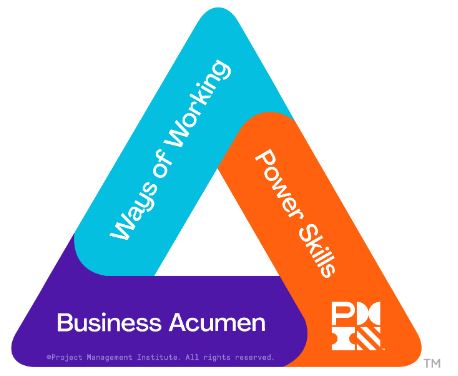
PMI Talent Triangle: Ways of Working
If your calendar is full but progress feels slow, the issue may not be effort. It may be design.
In this episode of the PMO Strategies podcast, I address a pattern many PMO and transformation leaders unintentionally create: meeting-based operating models where nothing moves unless everyone gathers at the same time.
Meetings are part of leadership. Alignment, escalation, tradeoffs, and conflict resolution often require conversation. But not all work requires synchronous time.
When calendars become the operating model, execution suffers.
Meetings Are Work, But Not All Work Requires a Meeting
Information sharing does not always require live discussion. Status updates do not require reading slides aloud. Dashboards exist so information can move without narration.
When organizations default to meetings for everything, they train people to believe that progress depends on attendance. That creates dependency, and dependency slows execution.
The distinction matters. Synchronous time is expensive. It consumes everyone’s attention simultaneously. That cost is worth paying when the outcome requires real-time interaction: negotiation, creative problem-solving, conflict resolution, or critical decisions where nuance matters.
But most status updates do not meet that bar. Neither do slide readouts, progress reports, or information that could be absorbed asynchronously and discussed only if questions arise.
Think about how your team currently operates. How many meetings exist primarily to share information that could be communicated in a written update? How many recurring sessions continue because they have always existed, not because they produce results? These patterns accumulate over time, creating an environment where attendance replaces action.
How Leaders Accidentally Create Saturation
PMO leaders want visibility. They want no surprises. They want executives informed and risk managed early. So cadence grows.
Weekly reviews. Monthly portfolio sessions. Steering committees. Cross-functional syncs. Executive pre-briefs. Each meeting makes sense individually. Collectively, they create saturation.
If you must attend everything to stay informed, your governance design is weak. If decisions only happen when everyone gathers live, decision rights are unclear.
Instead of fixing structure, many leaders add more meetings. The logic seems reasonable: more coordination should produce more alignment. But coordination without clear authority produces delay, not progress.
The root cause is often unclear decision rights. When no one knows who can say yes or no, every issue becomes a group discussion. When escalation paths are undefined, every risk requires a committee. When roles overlap, every action requires consensus.
This pattern becomes self-reinforcing. More meetings create more dependencies. More dependencies require more coordination. More coordination demands more meetings. The cycle continues until calendars are full and execution has nowhere to live.
The Night and Weekend Execution Problem
When the working day is consumed by meetings, execution shifts to evenings and weekends.
That is not a productivity flaw. It is a system flaw.
Worse, status-heavy meetings encourage performance instead of progress. Decks get polished. Dashboards get refined. Talking points get rehearsed. Meanwhile, real constraints remain unresolved.
A portfolio review that covers twenty projects but forces no prioritization decisions is not governance. It is theater.
The team spends hours preparing slides that tell leadership what leadership already knows. No tradeoffs are made. No resources are reallocated. No underperforming initiatives are stopped. Everyone leaves informed but nothing changes.
That meeting consumed dozens of hours of preparation time and an hour of executive attention. The return on that investment was zero.
I have seen teams where leaders praise “commitment” because people answer emails at 10 PM. But that is not high performance. That is a broken system that forces work outside of working hours. The best organizations protect time for deep work and reserve meetings for moments that genuinely require synchronous collaboration.
Meetings Used for Leverage
Effective meetings are decision-driven. They revolve around tradeoffs, escalation, or problem-solving. They end with clarity: what changed, who owns it, and what the deadline is.
If a meeting could be replaced with a concise asynchronous update and achieve the same result, it should not exist.
Meeting time should be reserved for what cannot be done alone. That means collaboration that requires real-time dialogue. That means decisions that need multiple perspectives weighed simultaneously. That means conflict that requires direct conversation to resolve.
Everything else is overhead.
When meetings produce leverage, they accelerate execution. A thirty-minute session that resolves a blocking issue saves days of downstream delay. A governance forum that makes a difficult prioritization call frees resources for higher-value work. That is the return on synchronous time.
Redesigning the Environment
Audit your recurring meetings. Which ones create decisions? Which ones create measurable shifts?
Ask one question at the end of every recurring session: what changed because we met? If the answer is nothing, that meeting needs intervention.
Clarify decision rights. Define escalation thresholds. Reduce the number of people required to move an issue forward. When authority is clear, fewer meetings are necessary.
Protect execution blocks. If your team cannot find uninterrupted time to think and build, your governance model is starving execution. Consider meeting-free mornings. Consider async-first defaults. Consider ruthlessly canceling any recurring meeting that has not produced a decision in the last three occurrences.
Start by examining your own calendar. Identify the meetings where you are present but not essential. Identify the sessions where decisions could be made without you if authority were clearer. Those are the first candidates for elimination or delegation.
Then look at your team. Where are they spending synchronous time that could be async? Where are they waiting for group sessions to move issues that one person could resolve? Those patterns reveal the structural weaknesses in your current operating model.
Meetings are not the enemy. Meeting dependence is.
Press play above to learn how to turn your meetings into a high-velocity decision engine and reclaim your calendar.
P.S. If your PMO is struggling to show strategic value, positioning may be the problem. Watch the free Rescue Your PMO webinar to diagnose what’s off track. Get the exact steps to turn things around fast. Learn more and register now.
 Hey there, IMPACT Driver!
Thanks for taking the time to check out our podcast and blog.
I welcome your feedback and insights!
I’d love to know what you think and if you love it, please leave a rating and review in your favorite podcast player.
You can also complete this survey to tell us more about you and get my advice on how to take your next steps toward high-IMPACT!
Warmly,
Laura Barnard