
Welcome to the PMO Strategies Podcast + Blog, where PMO leaders become IMPACT Drivers!
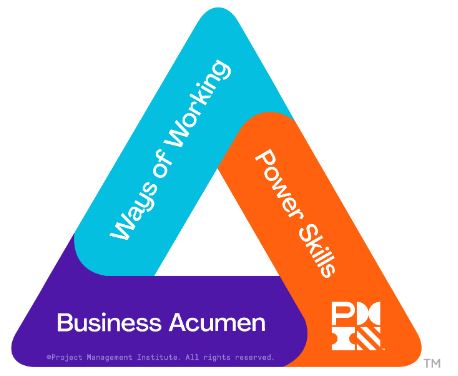
PMI Talent Triangle: Ways of Working
There is a conversation most PMOs are not having. Risk management sits in every methodology guide, every training curriculum, and every project kick-off agenda. Yet when you look at how organizations actually practice it, a familiar pattern emerges: the risk register gets created at the start of the project, reviewed once, and then quietly abandoned while everyone stays focused on delivery.
That pattern has a cost. Projects stall. Budgets overrun. Timelines slip. And leadership asks the same question after every breakdown: how did we miss that?
In Episode 353 of the PMO Strategies podcast, I had an incredible conversation with Russ Parker, PMP®, PMI-RMP®, PMI-ACP® and owner of 44 Risk PM. Russ is a retired U.S. Marine Corps officer who has built his post-military career drawing powerful parallels between military planning discipline and the project management world. His perspective on why risk management fails, and what it actually takes to fix it, is one of the most grounded conversations we have had on this subject.
Why Risk Management Becomes a Formality
Russ identifies three root causes that consistently reduce risk management to a checkbox exercise.
The first is the training gap. Most project managers received their foundational risk education inside a PMP prep course, where risk management gets roughly one to one-and-a-half hours across a 35-hour program. That is enough to introduce probability and impact matrices. It is not enough to build the judgment required to use that analysis to drive real decisions.
The second is the discomfort of uncertainty. In organizations with a no-fail performance culture, surfacing risks can feel like predicting failure. So risks get logged and left alone, because naming uncertainty creates a discomfort that busy teams do not have bandwidth to hold.
The third is the firefighting mindset. Many project managers have built a professional identity around solving problems under pressure. They are fast, resilient, and skilled at crisis response. What they may not recognize is that this orientation can quietly make them the source of the crises they are responding to.
The Fire Starter Problem
One of the most striking observations from this episode is that project managers who pride themselves on their crisis response skills may actually be fire starters. When risks are identified but not actively managed, when decisions get deferred because the team will handle it if it becomes an issue, those deferrals become the source of the next project crisis. The can gets kicked. The issue surfaces. The same team that skipped the proactive work is now praised for how quickly they responded to something they helped create.
Russ is direct about what drives this cycle: high-stress, cortisol-driven project environments normalize the adrenaline of constant urgency. People get good at surviving chaos. They begin to equate responsiveness with competence. But survival mode is not delivery excellence, and it is not an environment where strategy gets accelerated.
The antidote is a proactive-over-reactive mindset. Building that mindset at scale across a PMO requires more than reminding people to update the register. It requires specialization.
The Case for the Risk Management Professional
Russ draws a direct analogy from his military background. As a company commander in the Marine Corps, he worked alongside Chief Warrant Officers, restricted technical specialists embedded in units specifically for their deep domain expertise. They did not replace leadership judgment. They informed it. They handled the technical dimensions so that commanders could maintain strategic focus on mission delivery.
That is exactly what a Risk Management Professional does inside a PMO.
When an RMP is embedded on a project or across a portfolio, the project manager does not lose ownership of the risks. What they gain is someone whose full professional attention is on identifying, categorizing, quantifying, and monitoring those risks. The RMP follows up with risk owners. They notice when a vendor has been consistently late across the last several projects. They surface the positive risks that everyone overlooks because the word risk is culturally assumed to mean threat only.
And they free the project manager to focus on what they were actually hired to do: lead the people work, align stakeholders, and drive toward delivery outcomes.
For smaller PMOs without the budget for a dedicated hire, this does not require a full-time addition. Even one RMP shared across several projects at a fraction of their time provides a layer of discipline and focus that most PMOs are currently operating completely without.
Positive Risks: The Opportunity Most PMOs Are Ignoring
This point deserves deliberate attention. In standard project language, risk defaults to meaning something bad. A threat. Something to be avoided. But risk in the formal definition refers to uncertainty, and uncertainty includes upside.
Positive risks are opportunities: the possibility that a vendor delivers early, that a new technology reduces required effort, that stakeholder alignment accelerates a phase that was planned to take three months. If your risk management practice only catalogs threats, you are leaving real strategic value undiscovered and unmaximized.
A disciplined RMP builds a risk picture that captures both sides. The goal becomes minimizing the likelihood of negative outcomes while actively maximizing conditions for positive ones. That reframe alone can change how senior leadership perceives the value of the risk management conversation inside your PMO.
AI as a Risk Management Accelerator
For PMOs that do not yet have the budget or headcount for a dedicated RMP, Russ points to AI as a meaningful starting point. Specifically, he highlights its power for historical analysis and initial risk generation.
Before a planning session, you can use AI to synthesize lessons learned from past projects, generate an initial list of likely risks based on project type and scope, and identify patterns across portfolio history that might not be visible from inside a single project. Russ describes the ideal risk workshop setup as walking in with an AI-generated list of the first 100 risks worth considering, organized using a Risk Breakdown Structure, and then applying the human judgment of the team to refine, prioritize, and act on that list.
The technology accelerates the setup. The people still own the decisions. And that combination of AI efficiency with human context is where risk management starts to function like a real capability rather than an obligatory exercise.
Building Risk Discipline Without a Full-Time RMP
For leaders who want to build this capability incrementally, Russ offers a clear and practical starting point. Commit 30 minutes per week to active risk review. Launch every significant project with a dedicated risk workshop. Build a shared repository of common risks using AI to seed the initial list. And reframe the team conversation from what could go wrong to what could stand in the way of achieving the strategic outcome we are trying to deliver with this project.
That reframe matters more than it might seem. When risk management connects directly to business outcomes instead of project constraints, it stops feeling like administrative overhead and starts functioning as the decision support tool it was always designed to be. Leaders stop seeing it as a compliance item and start seeing it as the intelligence layer their strategy actually needs.
Press play above to hear the full conversation with Russ Parker and discover what becomes possible for your PMO when risk stops being a checkbox and starts being a core capability.
 Connect with Russ
P.S. If your PMO is struggling to show strategic value, positioning may be the problem. Watch the free Rescue Your PMO webinar to diagnose what’s off track. Get the exact steps to turn things around fast. Learn more and register now.
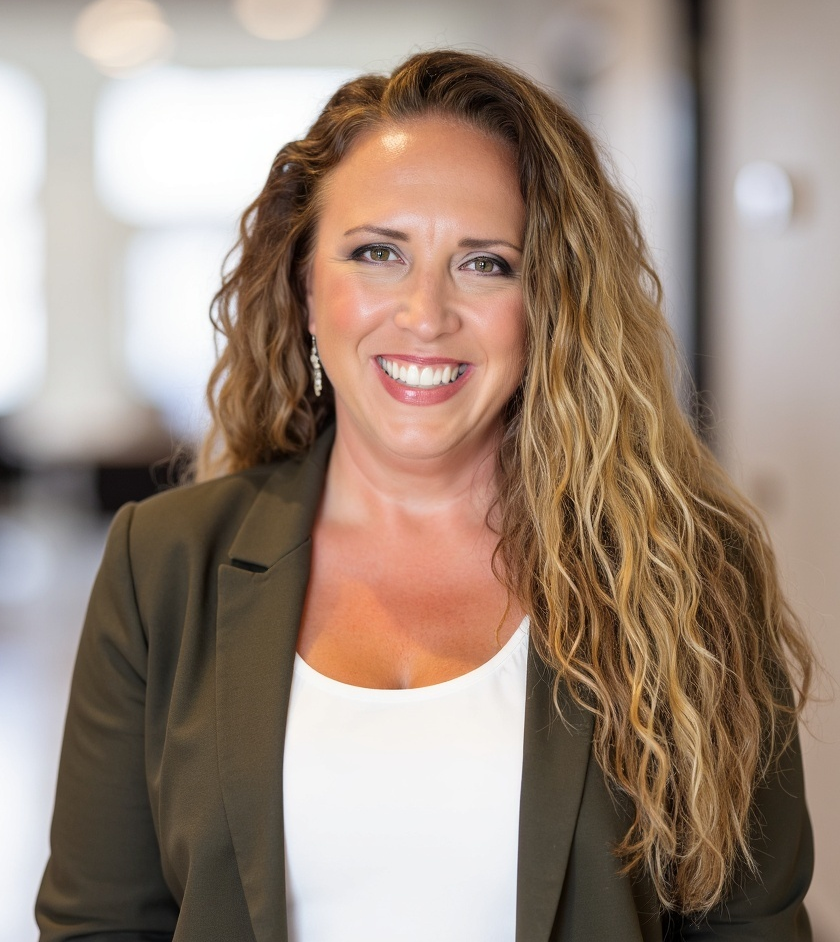 Hey there, IMPACT Driver!
Thanks for taking the time to check out our podcast and blog.
I welcome your feedback and insights!
I’d love to know what you think and if you love it, please leave a rating and review in your favorite podcast player.
You can also complete this survey to tell us more about you and get my advice on how to take your next steps toward high-IMPACT!
Warmly,
Laura Barnard