
Welcome to the PMO Strategies Podcast + Blog, where PMO leaders become IMPACT Drivers!
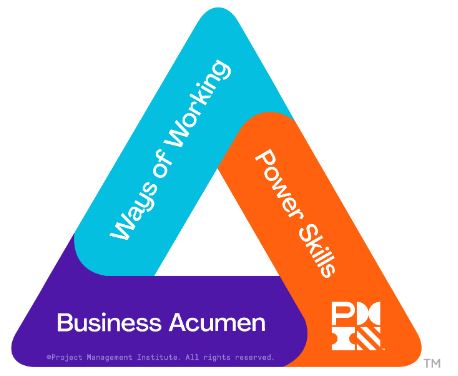
PMI Talent Triangle: Power Skills
Failure feels personal in transformation leadership
Transformation leadership is visible work.
When a governance rollout creates friction, stakeholders feel it.
When a portfolio decision gets overridden, executives notice.
When funding shifts and your roadmap collapses, the organization sees the stall.
For PMO and transformation leaders, setbacks rarely happen quietly.
You operate at the intersection of strategy and execution. Resistance can feel like rejection.
You designed the structure. You built the model. You rolled it out.
When it doesn’t land, the narrative becomes simple: This failed.
But what if that label is wrong?
The hidden cost of failure thinking
Failure thinking is emotional. It sounds like this:
“This didn’t work.”
“I misjudged the organization.”
“We lost credibility.”
When you internalize every setback, two things happen. You either get defensive or you get smaller.You start protecting your reputation instead of advancing the system.
That’s where transformation stalls. Let’s make this practical. You roll out structured intake.
Senior stakeholders bypass it.
Failure thinking says: The process failed.
Feedback thinking says: Decision rights are unclear.
You implement prioritization scoring. Business leaders override it.
Failure thinking says: They don’t respect the PMO.
Feedback thinking says: Incentives reward local optimization.
The model didn’t fail. It exposed the system.
The turning point that changed everything
Early in my career, I believed execution excellence was enough.
I built governance boards, reporting cadences, and structured methodologies.
Projects were delivered, yet executives were frustrated.
Strategy was not translating into measurable outcomes. Teams were busy, but IMPACT was inconsistent. At the time, it felt like personal failure.
In hindsight, it was feedback.
It revealed a deeper gap between strategy and execution.
Mechanics were strong. Alignment across the lifecycle was weak.
I was managing projects, not navigating strategy.
That realization became the foundation of The IMPACT Engine. The lesson wasn’t that I lacked capability. The lesson was that the problem was bigger than mechanics.
Failure vs. feedback in practice
Failure thinking focuses on identity.
Feedback thinking focuses on constraints.
When a roadmap is approved with enthusiasm and abandoned six months later?
The easy narrative is that the transformation failed.
The feedback may be:
-
- Strategic clarity wasn’t stable.
- Leadership commitment was conditional.
-
Change readiness was overestimated.
Those are diagnostic signals, not verdicts.
Inside the IMPACT Accelerator Mastermind™, leaders surface governance pilots.
They analyze scoring models that triggered political tension.
They examine planning cadences that misaligned with budgeting cycles.
These moments aren’t hidden. They’re analyzed.
Failing forward in a PMO context means piloting before scaling. Testing before institutionalizing. Surfacing executive misalignment early instead of smoothing it over.
The operational shift that changes everything
This isn’t semantics. It’s operational.
If you see failure, you protect yourself.
If you see feedback, you redesign.
Consider a PMO labeled bureaucratic.
Failure thinking says: We over engineered it.
Feedback thinking says: The organization’s tolerance for structure was lower than assumed.
Now you have a lever.
The label determines your next move.
The discipline of failing forward
Failing forward doesn’t mean celebrating mistakes.
It means extracting insight faster than the environment shifts.
Transformation is iterative.
No governance model lands perfectly the first time.
No portfolio structure is immune to politics.
No strategic roadmap survives unchanged in volatile conditions.
The real risk isn’t failure.
The real risk is misinterpreting feedback as personal limitation.
And shrinking your ambition because of it.
Failure feels personal.
Feedback is instructional.
The leaders who grow aren’t those who avoid setbacks.
They’re the ones who interpret them correctly.
🎧 Press play above to shift from failure thinking to feedback thinking.
TURN FEEDBACK INTO STRATEGIC ACTION
P.S. If your PMO is struggling to show strategic value, positioning may be the problem. Watch the free Rescue Your PMO webinar to diagnose what’s off track. Get the exact steps to turn things around fast. Learn more and register now.
 Hey there, IMPACT Driver!
Thanks for taking the time to check out our podcast and blog.
I welcome your feedback and insights!
I’d love to know what you think and if you love it, please leave a rating and review in your favorite podcast player.
You can also complete this survey to tell us more about you and get my advice on how to take your next steps toward high-IMPACT!
Warmly,
Laura Barnard