
Welcome to the PMO Strategies Podcast + Blog, where PMO leaders become IMPACT Drivers!
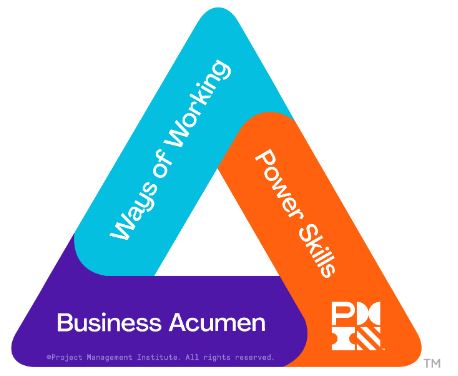
PMI Talent Triangle: Power Skills
When I started my career in 1999, I was a strong executor. I managed processes. I delivered projects on time. And then someone said: "Congratulations, you're a PMO leader now."
I had absolutely no idea what that meant.
Turns out, I wasn't alone. According to research by the Chartered Institute of Managers, 85% of managers consider themselves "accidental managers." They were promoted for their technical excellence, not their leadership capability. And they were thrown into the deep end without support, without development, without a framework.
The cost? Stalled decisions. Stakeholder friction. High turnover on their teams. A third of new managers lose team members within their first year, often not by design.
This is the problem that Ben Perreau, CEO of Parafoil, is solving through leadership intelligence.
Why Traditional Leadership Development Fails
Here's the reality: traditional leadership development is designed for executives, not for the middle managers driving change.
Send your exec team off to Harvard Business School for the summer? Great. They'll get world-class tutors and high-level thinking. But what about the PMO leader who just stepped into their role and has no idea how to give feedback without damaging the relationship?
They're on their own.
The biggest constraints have always been cost and time. Executive coaching is expensive. Week-long leadership programs mean you're not in the office. And that knowledge doesn't trickle down to the middle management layers who are actually the tip of the spear for change.
As I mentioned in my conversation with Ben: "Many organizations don't emphasize the importance or don't invest in building leadership competencies for their middle management… but the rest of you forget about it. There's a real gap in the industry."
And that gap is costly.
The Blind Spots AI Helps You See
In my 20+ years leading PMOs, I've noticed something: every leader has blind spots they can't see on their own.
Ben explained how Parafoil works: it gathers data from every conversation and meeting you have, then identifies patterns you might miss.
For PMO leaders, these behavioral moments matter:
Recurring decisions: The same decision gets brought back to the committee again and again. It first comes up at the beginning of the project. Then maybe it's the same person who keeps re-bringing these decisions back. You spot it eventually, but what if you could catch it earlier?
Participation inequality: You're about to have a high-stakes PMO meeting. Tomorrow you're announcing something with major impact. But only three people are talking. Why? Often there's a reason from weeks ago. Someone felt shut down. Now they don't contribute. AI spots this pattern. You can address it.
Decision efficiency: How much company time are you burning to make decisions together? How performant is the team from a "decisions per attendee-hour" perspective? Can you measure that? Yes. And you should.
Dominance patterns: Often there are dominant characters who don't reveal themselves until later. How do you spot these interpersonal dynamics? With leadership intelligence, you can.
As Ben said: "Even if it's just being used to confirm your instinct, it can be useful. You have a second set of authority that you can look at and say, 'My instinct was right, and here's the data.'"
The Feedback Ritual: Your Foundation
When Ben asked me what the first thing should be to improve leadership capability right now, my answer was immediate: Get your feedback rituals in place.
Unless you have a feedback ritual that's systemized where you're receiving it frequently (more frequently than every quarter), you don't have a baseline for how you improve.
Here's what a good feedback ritual looks like:
It doesn't overburden other people. But it's frequent enough that people who are more junior than you, your peers, stakeholders, senior folks…everyone has an opportunity to say, "Hey, this didn't work so well."
It can be retros. It can be individual feedback conversations. It can be 360 reviews. Whatever you choose, the key is that you ritualize it. Build it into your calendar. Reflect on it. Ask yourself: "What's the one thing I'm going to change this week?"
Stop Perfecting Weaknesses. Build Superpowers Instead.
Here's my final thought: stop trying to be perfect.
Know yourself. Know your flaws. Choose a few reasonable things to work on. Let go of the rest.
Then invest your energy in building on your strengths. That's where the superpowers are.
I told Ben: "I don't think people should beat themselves up trying to be perfect all the time. They need to know the things they're going to work on, choose a few reasonable things, and let go of the rest in favor of spending energy building on your strengths. If you have a strength and you invest in building that strength, it can become your superpower."
If you spend all your energy on weaknesses, you have no time to build superpowers. And you'll end up in a miserable place as well.
Why Interpersonal Skills Are Your Competitive Advantage Now
Here's what's happening: AI is automating the technical work of project management.
Dashboards. Reports. Spreadsheets. Data analysis. The administrative, technical aspects of the role are going away. And honestly? Good.
Because if your job is just gathering inputs and generating information, that's work that can be automated.
The power is in the people.
Your value is in your ability to influence stakeholders, communicate ideas, tell stories, bring people through change, build culture, and navigate complexity.
As Ben and I discussed: "The more that we can… that's the stuff that's not going to be replaced by AI anytime soon. That's where your superpower is."
This is where leadership intelligence becomes essential. You need a way to accelerate your growth in interpersonal skills. You need feedback that's frequent enough to matter. You need a second set of objectivity to help you see what you're missing.
The Real Power of Leadership Intelligence
Leadership intelligence isn't about technology doing the thinking for you. It's about having a thought partner by your side who helps you see what you might miss.
Ben and I talked about using AI tools: "We use AI quite a bit, not to do the thinking for us. I use it as a thinking tool. I have conversations about topics I'm building, what am I missing? So it's not just doing the technical components. We can actually use AI to help us think. But it shouldn't do the thinking for us."
That's the difference between good tools and great ones.
Press▶️ play above to hear the full conversation with Ben Perreau about leadership intelligence, feedback rituals, and how to move from accidental manager to strategic leader.
 Connect with Ben:
Connect on LinkedIn
Email the Parafoil team
P.S. Want to move from accidental manager to strategic leader? The IMPACT Engine System gives you the framework to uncover your blind spots, build team trust, and lead with confidence. Learn more and register here.
 Hey there, IMPACT Driver!
Thanks for taking the time to check out our podcast and blog.
I welcome your feedback and insights!
I’d love to know what you think and if you love it, please leave a rating and review in your favorite podcast player.
You can also complete this survey to tell us more about you and get my advice on how to take your next steps toward high-IMPACT!
Warmly,
Laura Barnard