PMI Talent Triangle: Business Acumen
A strategy can be perfectly clear in the executive meeting and still become painfully difficult to deliver once it reaches the people doing the work.
That gap is familiar to PMO and transformation leaders. You are handed the priority and expected to make it real, but the portfolio view you have does not include everything consuming the organization’s capacity. Functional teams have their own commitments. Executives introduce new urgent work. Decisions wait for calendars to align. The same specialists appear on project after project. Soon the organization concludes that it has a resource problem.
Sometimes it does. But often the deeper issue is the way work is being made visible, sequenced, and moved through the organization.
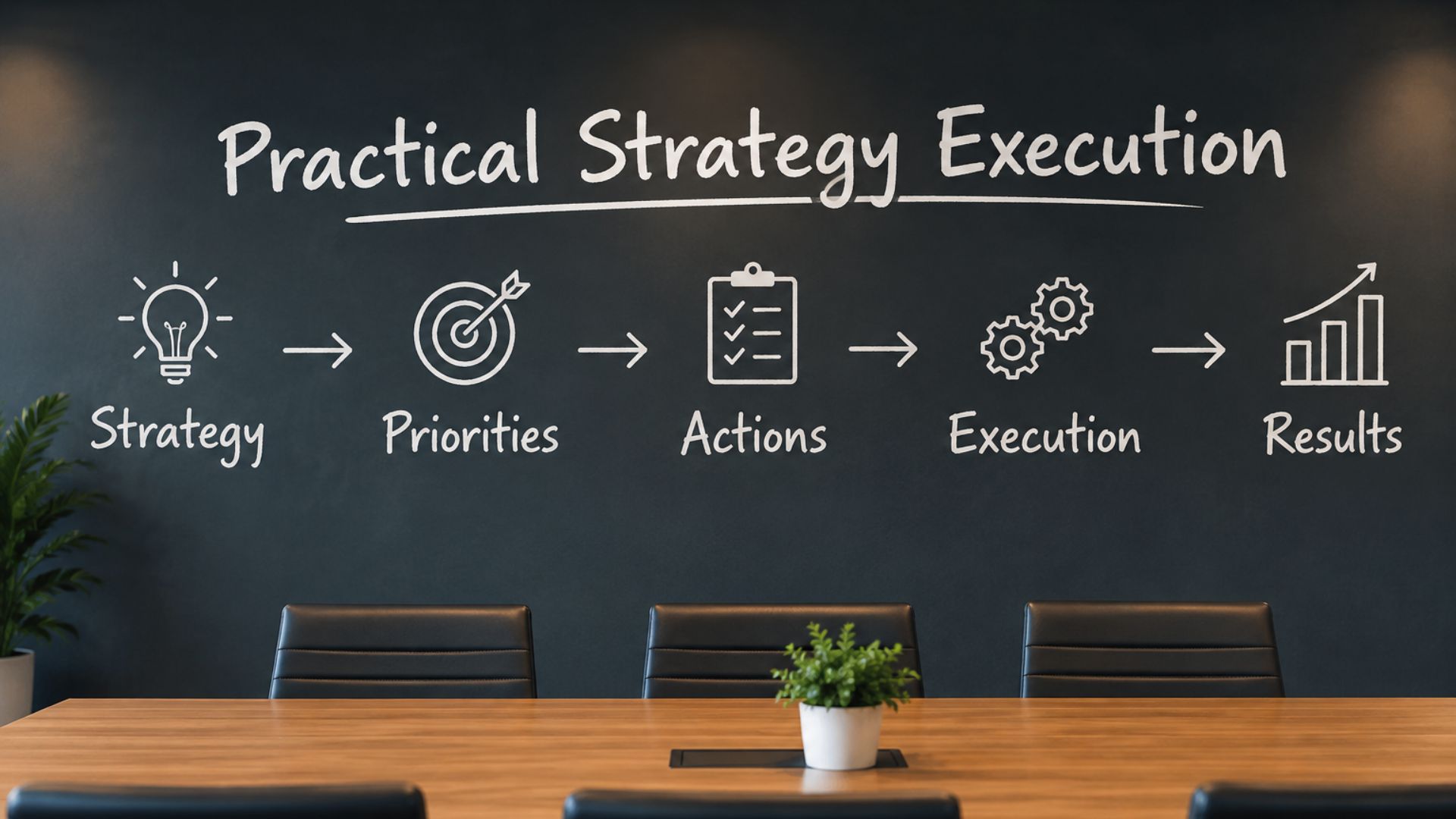
That is why practical strategy execution has to begin above the level of any one project plan. The PMO needs to understand the system of work.
You cannot manage capacity you cannot see
One of the most important phrases Paul Thompson uses in our conversation is “ruthless transparency.”
That does not mean the PMO owns every initiative. It means the organization cannot make credible portfolio commitments if significant work remains invisible.
A functional leader may have a compliance initiative, an operational improvement, a technology upgrade, and several smaller departmental commitments that never appear on the enterprise project list. From the PMO’s perspective, the people assigned to the flagship transformation look available. From the functional leader’s perspective, those same people are already committed.
Both views can be accurate, and the portfolio can still be wrong.
The business consequence shows up later. Projects start slowly. Critical specialists are double-booked. Dates move. Leaders argue about whether teams are working hard enough. The PMO is asked to “fix resourcing” without a complete picture of where capacity is already going.
The first leadership move is not another staffing spreadsheet. It is visibility.
You do not need to control all the work to understand what is consuming the people your strategy depends on. Once the work is visible, the organization can have a much more useful conversation about what should start, what should wait, and what tradeoff leaders are actually choosing.
Smaller work can create faster value without reducing ambition
Large strategic initiatives often feel as if they have to launch in one impressive wave. There are good reasons for that instinct. Funding is hard to win. Executive attention is scarce. Business sponsors worry that this may be their only opportunity to get everything they want.
The problem is that bigger batches also create bigger coordination demands, more dependencies, more risk, and more opportunities for the entire initiative to wait.
Paul shared a data-center migration involving more than 600 applications. Instead of organizing the move into a handful of enormous cutovers, the team migrated one application at a time while building a repeatable rhythm that allowed them to move about ten per day.
The ambition did not shrink. The unit of progress did.
That distinction matters.
Smaller controlled releases make it easier to isolate problems, learn earlier, reduce the number of people who need to coordinate at one time, and show visible progress. Each successful move also creates evidence that the approach works, which can make the next group more willing to participate.
For PMO leaders, this is a useful question whenever a strategic initiative feels too big to move: where can we reduce the batch size without reducing the intended business outcome?
The goal is not to make every transformation tiny. It is to structure progress so the organization can learn and create value before the very end.
Decisions should move before the meeting
Meeting overload is another symptom of an execution system that is not flowing well.
Too many organizations use meetings as the place where people first encounter a decision. The context is new, the politics are visible, and everyone is expected to process, challenge, negotiate, and agree in real time. It is no surprise that the decision often gets deferred to another meeting.
Paul described a different practice from his ROPE Framework: use a concise one-page view of the issue and run a “paper route” with the people whose input matters before the formal meeting.
The purpose is not to manipulate the outcome. It is to surface concerns while people have room to be candid, incorporate useful feedback, and understand where resistance or hidden constraints may exist.
Then the meeting can do what too many meetings never reach: ratify the decision and trigger action.
This is also a trust-building move. Stakeholders are less likely to feel cornered by a decision they are seeing for the first time. The PMO learns what matters to them. Leaders can raise the concerns they may not want to expose in a large group. By the time everyone comes together, the debate is better informed and the path forward is clearer.
A strategic PMO does not create value by adding more meetings. It creates value by improving the quality and flow of the decisions the organization needs to make.
Your portfolio will move at the speed of its constraint
The phrase “we need more resources” is easy to understand because every team can point to work it does not have enough time to finish.
But an enterprise portfolio does not move at the average capacity of the organization. It often moves at the pace of a small number of constrained roles, teams, or decision points.
Paul used the example of a client whose network team had become the constraint. Once the organization could see it, the resource manager had permission to protect that team from lower-value requests, move some work elsewhere, and sequence projects around the capacity that actually set the pace.
That is a very different response from spreading every person across every priority.
When the constraint is invisible, leaders can keep approving work that appears staffed on paper but cannot actually flow. When the constraint is visible, the organization can make a tradeoff: protect the bottleneck, change the sequence, reduce lower-value demand, bring in targeted support, or change the design of the work.
The PMO is uniquely positioned to make that pattern visible because it can see across projects, functions, dependencies, and strategic priorities.
That is where portfolio leadership becomes more than project coordination.
Think like the CEO of the capability you lead
Paul’s final recommendation pulled the entire conversation together: the PMO leader needs to become the CEO of their part of the organization.
A CEO does not wake up thinking first about whether every template is complete. The CEO is thinking about customers, growth, risk, priorities, outcomes, and what is preventing the business from moving.
PMO and transformation leaders need that same business lens.
That does not mean delivery discipline disappears. It means the discipline has a purpose. Visibility helps leaders make tradeoffs. Smaller releases help the organization create value and learn sooner. Better decision practices reduce delay. Constraint management helps scarce capacity produce more of the work that matters.
This is the shift from managing projects to helping the organization deliver strategy.
If your portfolio is not moving fast enough, resist the urge to begin with another layer of process. Make the work visible. Find the constraint. Look at how decisions are flowing. Ask where the work can be structured into smaller, controlled progress.
Then lead the conversation from the business outcome backward.
Press play above to hear the full conversation with Paul Thompson and see how these practical moves fit together.
P.S. If you’re accountable for making strategy happen but too many of the priorities, decisions, and constraints were shaped before you ever got a voice in the conversation, I want to help you change that.
The recording of my Six Moves to Build a High-IMPACT PMO workshop is available through September 20. You’ll learn six moves for identifying what is really driving the problems your PMO is being asked to solve, communicating those issues so leaders hear and act on them, and building the influence that gets you invited into the conversations that matter earlier. Watch the Six Moves replay before September 20.