
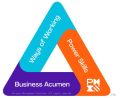
PMI Talent Triangle: Power Skills
When people are not engaging with the work, PMO and transformation leaders often assume the problem is close to home. Maybe the communication is not clear enough. Maybe the sponsor is not reinforcing the message. Maybe the team needs another stakeholder plan, another meeting cadence, or another round of follow-up.
Sometimes that is true. Sometimes the problem is much bigger.
In this episode, I’m joined by Ian Watts, founder of SB Dream Coach and Employee Success Group. Ian has spent more than two decades working across leadership, workforce transformation, and talent development. His perspective matters here because he asks us to look below the visible stakeholder behavior and consider whether disengagement itself may be one of the root causes slowing strategy delivery.
The stakeholder problem may not be about your PMO
When I teach PMO and transformation leaders to diagnose what is really getting in the way of strategy delivery, I want them to move beyond symptoms. A missed meeting is a symptom. A delayed decision is a symptom. Low participation is a symptom.
The question is what is causing it.
Ian’s point pushed me to add another possibility to that diagnostic work. If people across the organization are disconnected from the company, their leaders, or the work itself, the PMO may experience that disengagement as stakeholder resistance. You can keep improving your communication plan, but if the root issue is broader employee disengagement, you are treating the wrong problem.
That does not mean every stakeholder issue belongs to HR. It means strategic leaders need to be curious enough to distinguish between a local relationship problem and a wider organizational pattern.
That distinction matters because the intervention is different. If the relationship between the PMO and one stakeholder is weak, you can work directly on trust, clarity, and relevance. If the same behavior is showing up everywhere, across teams and functions, you may need to involve leaders who own the broader employee experience.
Engagement is not separate from business performance
Ian makes the case that engagement has real business consequences. He connects disengagement to productivity, turnover, and the cost of replacing people. Those costs do not always show up neatly next to the project plan, but they still affect the organization’s ability to execute.
That is especially important for PMO and transformation leaders because strategy is delivered through people. You can have the right portfolio, the right governance, the right metrics, and a perfectly organized plan. None of those things create value unless people make the decisions, do the work, adopt the change, and keep moving when execution gets hard.
This is why I do not want PMO leaders dismissing employee engagement as something soft or separate from strategy delivery. If people are not connected to the work, the delivery system is already carrying more risk than the dashboard may show.
Perks are not the same as commitment
One of the best parts of our conversation was the distinction between thoughtful connection and performative perks.
I shared two very different experiences from my own career. In one environment, things like food, games, and team activities helped create community because the intent was genuine. People were working hard, and those moments created connection and relief.
In another environment, similar perks were used while people were expected to work punishing hours. The same surface-level benefit landed very differently because the underlying experience was different.
That is the leadership lesson. A pizza party cannot repair a system that is exhausting people. A team event cannot replace trust. A recognition program cannot compensate for people feeling invisible.
The tactic is not the point. The intent, the relationship, and the operating environment are what give the tactic meaning.
Human-centered leadership does not mean lowering the bar
Ian describes his ACTS Method around Aspirations, Calling, Transformation, and Support. The core idea is that leaders build deeper commitment when they understand people as individuals and invest in what matters to them, not only in what the organization wants from them.
That does not mean accountability disappears. It means accountability exists inside a relationship where people know they matter.
For your direct team, this can be very practical. You can learn what your people are trying to build in their lives and careers. You can understand what kinds of opportunities energize them. You can help them grow in ways that support both their goals and the organization’s goals.
For stakeholders you do not manage, the conversation has to be different. You probably are not going to ask a sponsor to walk you through their personal dreams. But you can get much better at understanding what success means to them.
What are they trying to accomplish? What would make this initiative worth the effort? What pressures are they carrying? What changes for them if the work succeeds?
That is the WIFM conversation we talk about all the time: what is in it for them, personally and professionally.
Start by diagnosing before you prescribe
The practical takeaway is not to launch a new engagement program tomorrow. It is to look more carefully at the pattern in front of you.
If one stakeholder is hard to engage, look at the relationship. If an entire function is disengaged, look at the environment. If your own team is technically performing but emotionally checked out, look at how well you actually know the people behind the roles.
And when you are entering a new stakeholder relationship, ask better questions before you decide what they need. Ian suggests getting clear on what would make the work worthwhile from the stakeholder’s point of view. That gives you a much stronger foundation for framing the work, the tradeoffs, and the value.
This is where PMO leadership becomes more strategic. You stop treating every visible behavior as the problem and start looking for the root cause underneath it.
Strategy delivery is a people system. The more accurately you understand what is happening with the people in that system, the better equipped you are to remove the real barriers to measurable business IMPACT.
Press play above to hear my full conversation with Ian Watts and rethink what may really be driving the engagement problems you are seeing.
P.S. The same principle applies when you need executive support for the PMO: people commit when they can see why the work matters. My FREE live training, Build a Business Case for a Strategy-Driven PMO, will help you connect the PMO to the business problems, measurable outcomes, and 90-day progress your leaders care about. Register for the free training.