
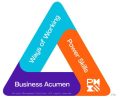
PMI Talent Triangle: Business Acumen
Many organizations still debate whether PMOs truly add value. Some executives view them as essential, while others see them as bureaucracy that slows the organization down. The reality is that both perspectives can be true depending on how the PMO was designed.
In many companies, the PMO was originally created to manage projects. The intention was to bring structure, consistency, and discipline to delivery. But executives are rarely asking for better documentation or more governance. What they really want is confidence that the organization can deliver the strategy it has committed to pursuing.
When that gap appears between what leaders expect and what the PMO delivers, credibility begins to erode. A PMO designed to manage project activity may struggle to prove value in an organization that needs stronger strategy execution. That is why the PMO must evolve from a function that tracks work to a capability that helps the organization deliver meaningful business outcomes.
Why PMOs Struggle to Demonstrate Value
Most PMO leaders work extremely hard. They introduce governance frameworks, reporting structures, portfolio processes, and delivery practices intended to improve execution. Yet executives still ask the same question: Why are we not seeing results from our initiatives?
The issue often comes down to how the PMO was designed. Many PMOs are built around project management mechanics instead of strategic outcomes. When that happens, the PMO may become very good at tracking work, but not necessarily effective at helping the organization deliver the results that matter most. The PMO ends up optimizing reporting instead of enabling strategy execution.
The strongest PMOs do something different. They connect strategy, priorities, decisions, resources, execution, and measurable outcomes. They help leaders see where work is aligned, where execution is stuck, where decisions are needed, and where value is or is not being realized. That is the shift from a traditional PMO to a strategic delivery engine.
Mistake 1: Becoming a Bottleneck
Governance is meant to support alignment and decision-making. But when governance processes multiply, they can slow execution dramatically. In some organizations, initiatives must pass through several layers of approval before work even begins. Finance reviews the budget. Architecture evaluates the technology implications. Governance committees review the plan. Executive groups review the recommendations.
The intention is alignment. The result can be months of delay before any meaningful progress begins. Eventually, business leaders bypass the process entirely. When that happens, the PMO loses both credibility and visibility. The PMO created governance to improve control, but the process became so heavy that leaders found ways around it.
That is the danger. Governance becomes a problem when it delays decisions instead of enabling them.
The solution is not to eliminate governance. The solution is to redesign governance around the decisions that need to be made. A strategic PMO should ask what decision leaders need to make, what information they need to make it, who has authority to decide, and how quickly the organization can move forward once the decision is made.
Governance should help the organization say yes, no, not now, or not this with greater confidence. The PMO’s role is not to create more approval steps. It is to improve decision quality, clarify accountability, and help the organization move the right work forward faster.
Questions to Ask
- What decision is this governance process helping leaders make?
- Where are initiatives getting delayed because of approval steps?
- Are business leaders using the process, or are they working around it?
- What can we simplify while still protecting alignment and decision quality?
Points to Remember
- Governance should accelerate decisions, not delay them.
- If your process is too difficult to use, people will bypass it.
- The goal is not more control. The goal is better decisions, stronger alignment, and faster movement on the work that matters most.
- Strong governance makes it easier for leaders to make confident decisions, not harder for teams to get work done.
Mistake 2: Lacking a Clear Value Proposition
Another common problem is that stakeholders struggle to describe the value of the PMO. Executives may say the PMO tracks project status, runs governance meetings, maintains documentation, or creates reports. While those activities may be important, they do not clearly connect to business outcomes.
That creates risks. When leaders cannot articulate the value of a function, that function becomes vulnerable. This does not mean the PMO is not working hard. Many PMO teams are extremely busy preparing dashboards, collecting updates, facilitating meetings, managing tools, and supporting teams across the organization. But effort is not the same thing as impact.
If the PMO describes its value in terms of tasks, executives may see it as an administrative function. If the PMO describes its value in terms of outcomes, executives are more likely to see it as a strategic capability.
Strong PMOs define their value in terms executives care about. They help the organization prioritize the right initiatives, improve visibility into investment decisions, allocate resources more effectively, reduce confusion around ownership and accountability, and improve confidence that strategic initiatives will deliver the intended business results.
The PMO should be able to clearly answer this question: What business problem do we solve for the organization? That answer should not sound like project management language. It should sound like business language. For example, a stronger value proposition might be: “We help leadership focus resources on the initiatives that matter most,” or “We create the visibility and decision support leaders need to deliver strategic priorities.”
That is much stronger than “we manage project status.”
Questions to Ask
- What business problem does our PMO exist to solve?
- Would executives describe our value the same way we do?
- Are we known for managing project activity or enabling business outcomes?
- Can we explain our value without using project management jargon?
Points to Remember
- The PMO’s value is not the meetings it runs, the reports it creates, or the templates it maintains.
- Activities are only valuable when they help create meaningful business outcomes.
- If executives cannot connect the PMO to strategic results, the PMO’s credibility will always be at risk.
- A strong PMO value proposition should be clear, executive-relevant, and outcome-focused.
Mistake 3: Measuring Outputs Instead of Outcomes
Many PMOs measure activity instead of IMPACT. They track metrics such as the number of projects delivered, the number of reports produced, the number of governance meetings held, or the number of projects marked green, yellow, or red. Those metrics may show effort, but they do not reveal whether the organization is making progress toward its strategic goals.
Executives want to know whether initiatives improved customer experience, increased efficiency, reduced cost, accelerated growth, improved employee experience, reduced risk, or delivered the intended business benefit. That is a different measurement conversation.
A project can be delivered on time, on budget, and within scope and still fail to create the expected business value. That is one of the biggest traps in traditional project management. Delivery performance matters, but delivery performance is not the same thing as business impact.
The better question is not simply whether the project plan was completed. The better question is whether the initiative achieved the outcome it was created to deliver.
The solution is to define success before work begins. Every strategic initiative should have a clear connection to a business goal. It should have defined outcomes, measurable success criteria, ownership for benefits realization, and a plan for how value will be monitored after delivery.
The PMO can play a critical role here. It can help leaders clarify what success looks like, challenge vague business cases, ensure initiatives are tied to strategic priorities, identify leading and lagging indicators, and create visibility into whether benefits are being realized. This is how the PMO moves from tracking projects to managing impact.
Questions to Ask
- What business outcome is this initiative supposed to create?
- How will we know whether this initiative worked?
- Who owns the business outcome after the project is delivered?
- Are we reporting project progress or value realization?
Points to Remember
- On time, on budget, and on scope only tells you whether the project followed the plan.
- Delivery performance does not automatically equal business impact.
- The PMO earns greater credibility when it helps define, measure, and communicate business value.
- Outcome measurement should begin before the initiative starts, not after the project closes.
Mistake 4: Overcomplicating the Process
Complex frameworks often emerge from good intentions. PMOs introduce detailed processes and extensive documentation requirements in an effort to create consistency. They want better planning, clearer expectations, stronger governance, and more reliable delivery.
But complexity can slow teams down. In one organization I worked with, the PMO required dozens of templates for project teams. Each template had a purpose and was created to solve a real issue. But together, they became overwhelmed. Eventually, teams stopped engaging with the process because it created more work without clear value.
That is when the PMO process becomes performative. People fill out the forms because they are required, not because the forms help them think, decide, align, or deliver. When that happens, the PMO may have compliance, but it does not have commitment.
The solution is to right-size the process. Effective PMOs design the minimum process necessary to create maximum clarity. They do not force every initiative through the same level of rigor. They scale governance, documentation, and oversight based on the size, complexity, risk, and strategic importance of the work.
A major enterprise transformation may need more structure. A small internal improvement effort may need a lighter path. The goal is not to make every project look the same. The goal is to give each initiative the right amount of structure to improve execution and outcomes.
Every process step should earn its place. If a template, meeting, approval, or report does not help someone make a better decision, reduce risk, improve alignment, or deliver value faster, it should be simplified or removed.
Questions to Ask
- Which parts of our process actually help teams deliver better outcomes?
- Where are teams slowing down because of PMO requirements?
- Are we designing for control or for clarity?
- What can we simplify without increasing risk?
Points to Remember
- The best process is not the most complete process.
- The best process is the one people actually use to deliver better results.
- PMO discipline should make execution easier, clearer, and more reliable.
- Right-sized governance creates consistency where it matters without overwhelming delivery teams.
- If a process step does not improve decisions, alignment, risk management, or outcomes, it should be challenged.
Mistake 5: Waiting Too Long to Deliver Value
When organizations establish a new PMO, they often spend months designing the perfect operating model. They create governance structures, portfolio management frameworks, reporting systems, role definitions, intake processes, dashboards, templates, and methodologies before delivering any visible results.
Some of that work may be necessary. But if the PMO spends too long building the system before demonstrating value, executives may start to lose patience. Credibility is built through IMPACT, not design.
The organization does not need the PMO to be perfect before it becomes useful. It needs the PMO to solve meaningful problems quickly.
That is why successful PMOs focus on early wins. They identify a high-priority business problem, work with leaders to clarify the outcome that matters most, focus on a small number of high-value actions, remove barriers, create visibility, and help move important work forward. Then they measure and communicate the results.
This creates momentum. Instead of disappearing for months to build the perfect PMO, the team starts proving value right away.
This is the idea of building a minimum viable PMO capability. Start focused. Solve a real problem. Show value. Learn from the experience. Then expand. The PMO does not need to deliver every service at once. It needs to deliver the right service at the right time to address the most important business needs.
Questions to Ask
- What urgent execution problem do leaders need to solve now?
- Which strategic initiative is stuck, delayed, or at risk?
- What minimum viable service or capability can we launch first?
- How will we measure and communicate the impact of that early win?
Points to Remember
- Do not wait until the full PMO model is built to start delivering value.
- Start with one meaningful problem that matters to leadership.
- Solve it well, measure the result, and communicate the impact.
- Early wins create trust, and trust gives the PMO permission to expand its influence.
- The PMO does not need to do everything at once. It needs to deliver the right value at the right time.
When the PMO Gets It Right
When PMOs focus on outcomes instead of activities, their role changes dramatically. They help leadership align initiatives with strategy, improve investment decisions, create visibility across the portfolio, clarify ownership and decision-making, and help teams focus on the work that matters most.
Most importantly, they help ensure initiatives deliver the results the organization expects. In other words, the PMO becomes the capability that turns strategy into execution. That shift allows the PMO to move from a reporting function to a strategic delivery engine.
The PMO is no longer simply asking for status updates. It is helping the organization answer bigger and more important questions:
- Are we investing in the right work?
- Are our priorities clear?
- Do we have the capacity to deliver what we have committed to?
- Are our strategic initiatives producing the intended outcomes?
- Where are we stuck?
- What decisions need to be made?
- What value are we creating?
That is where the PMO becomes indispensable. The strongest PMOs are not defined by governance, templates, tools, or reports. They are defined by the business outcomes they help the organization achieve.
When the PMO is designed around strategy delivery, measurable value, and executive confidence, it becomes one of the most powerful capabilities in the organization.
Press play above to uncover the The Top 5 PMO Mistakes Killing Your Strategic IMPACT.
P.S. Many PMOs are working harder than ever and still struggling to earn the support needed to THRIVE, not just survive. The problem often isn’t the effort. It’s resistance, lack of engagement, and poor results. If you want to rebuild credibility with your executives and stakeholders FAST, the PMO Rescue Webinar walks through how to identify where your PMO is off track and shift to create immediate IMPACT. Learn more and register now.