
PMI Talent Triangle: Power Skills
You Cannot Build Sustainable Organizations with Depleted People
There is a version of sustainability that never shows up in a corporate environmental report.
It does not have a carbon metric or a waste reduction target. It does not get presented to the board. But when it runs out, your strategy stalls, your team disengages, and your transformation effort becomes another casualty in a long list of initiatives that launched with momentum and died from exhaustion.
It is the sustainability of the people responsible for executing the work.
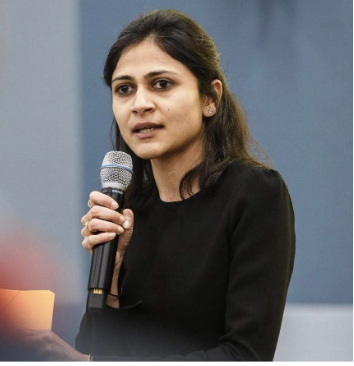
In Episode 357, I had an incredible conversation with Mita Broca, a sustainability consultant, Sustainability Leader of the PMI Norway Chapter, facilitator, and storyteller who has spent 15 years working with organizations like Unilever, IKEA, Shell, and MasterCard. Mita operates at the intersection of sustainability, leadership, and human development. And she brought a perspective that I think every PMO and transformation leader needs to hear right now.
The Traditional View Was Too Narrow
Mita started her career working on what most people think of when they hear sustainability.
Reducing environmental footprint. Building circular systems. Helping organizations understand the full life cycle of their products and their consequences.
The work was real and it mattered. But something kept surfacing. The very leaders responsible for driving sustainability transformation were overextended. Exhausted. Disconnected from the mission they were supposed to champion. And she could see it in others long before she recognized it herself.
The turning point came personally when she became a mother. Everything came into sharper focus. She realized she had been operating unsustainably for years. And that recognition became the foundation of her expanded view: you cannot create sustainable organizations without sustainable people. And you cannot have sustainable people without sustainable leaders.
Extractive vs. Regenerative: The Distinction That Changes Everything
One of the most clarifying frameworks Mita shared in our conversation is the difference between extractive and regenerative ways of working.
In environmental sustainability, extractive models take more from a system than they give back. They deplete. They erode. They eventually collapse. Regenerative systems, by contrast, restore balance. They are designed for renewal.
The same principle applies to how we lead.
Extractive leadership looks like: overcommitting, saying yes when the right answer is no, treating human capacity as an infinite resource. And the data backs up the consequences. Research shows that approximately 70% of large-scale transformation efforts fail. Not because of poor strategy. Because of people-related factors. Leadership misalignment. Change fatigue. Disengagement. In other words, organizations are attempting to deliver transformation on depleted capacity.
This connects directly to something I cover in the IMPACT Engine System: strategy alone is not enough. Real IMPACT requires pairing the right strategy with the capability to execute at pace and scale. If your people are running on empty, even the right strategy is set up to fail.
Regenerative leadership asks a different question. Not how much can we push. But what are the conditions that allow people and performance to truly thrive?
Practically, that means designing renewal into the work from the beginning. Not waiting for after-action reviews to wish you had built in more reflection time. It means building psychological safety. Aligning purpose with delivery. Recognizing that human capability is not infinite.
Self-Awareness Is a Leadership Risk Management Tool
Mita made a point in our conversation that stopped me. She said self-awareness is not a soft skill. It is a leadership risk management tool.
If you are not aware of your own depletion, your unhealthy patterns will scale across the organization. Your energy, or the absence of it, sets the culture. If you reward urgency over reflection, urgency becomes the culture. If you model boundaries, clarity, and renewal, that becomes the culture.
The question she invites leaders to ask is direct: am I leading from a place of alignment, or am I leading from exhaustion?
Most leaders already know the answer. The hard part is giving yourself permission to pause long enough to hear it.
Burnout Does Not Arrive Dramatically
One of the most important things Mita shared is that burnout does not announce itself. It does not flip a switch. It creeps in. Quietly.
The signals are always there. The body never lies. But most high performers have become experts at overriding those signals in the name of resilience. Mita was transparent about her own experience with this. She heard people call her resilient.Instead of resting, she pushed harder to prove it. That pattern has a ceiling. Everyone hits it eventually.
For PMO and transformation leaders specifically, the signal to watch for is this: you no longer feel connected to why you are doing the work. The complexity is still there. The pressure is still there. But the sense of meaning has gone quiet.
That is not a personal weakness. Research shows that three out of four professionals experience burnout at some point in their careers. It is a systemic problem that requires a systemic response.
One Practical Shift You Can Make This Week
Mita’s practical invitation is this: treat rest and renewal as a leadership responsibility. Not a luxury. Not a reward. A responsibility.
Build reflection into your operating rhythm the same way you build a project plan. Even ten minutes a week.
3 questions worth asking:
- What is draining me?
- What is energizing me?
- Where do I feel misaligned?
Those questions will tell you more about your leadership capacity than any status report.
Sustainability is not a destination you arrive at once. It is a practice. A muscle. A commitment you return to again and again. Because the way we work should be as sustainable as the IMPACT we are trying to create.
The Connection to Strategy Delivery
Here is the through-line for every PMO and transformation leader listening. We talk constantly about accelerating strategy delivery. Getting the right work done. Closing the strategy-to-execution gap.
None of that is possible if the people responsible for delivering the strategy are burnt out, disconnected, and operating in survival mode.
Your personal sustainability is not separate from your professional IMPACT. It is the foundation of it. When you are energized and grounded in purpose, you lead with clarity instead of fear. Your teams perform better. The work moves faster. And the IMPACT becomes more enduring.
Start there.
Press play above to hear the full conversation with Mita Broca. This one is worth your full attention.
P.S. If leadership keeps questioning the value of your PMO, the problem is probably not your team. It may be your starting point. Join me on Tuesday, June 2 at 12:00 PM EDT | 5:00 PM BST for a free House of PMO webinar on how PMOs can become seen, trusted, and valued for the IMPACT they create. This is also a great opportunity to ask questions if you’ve been curious about IMPACT Engine Fundamentals, IMPACT Engine Practitioner, or the full IMPACT Engine System. Register for the free webinar here.