What to Do When Your Organization Has Multiple PMOs


PMI Talent Triangle: Business Acumen
When Multiple PMOs Become a Problem
When executives have to reconcile four different views of the same portfolio, the organization does not have a reporting problem. It has a strategy delivery problem.
This is what happens in many larger organizations with more than one PMO. There may be an IT PMO, a business PMO, a transformation office, a product delivery function, and a strategy execution group all operating at the same time. Each one may have been created for a valid reason. Each may be led by capable people. Each may be doing meaningful work.
That is why the existence of multiple PMOs is not automatically a sign that something has gone wrong. In many organizations, it is a sign that different parts of the business recognized a need for stronger delivery discipline and built the capability to support it.
The problem starts when those delivery functions operate independently. When every PMO has its own data, its own reporting format, its own definition of “on track,” its own prioritization process, and its own executive narrative, the organization does not gain delivery capability. It inherits fragmentation.
That fragmentation is costly. It creates visibility gaps for executives, resource conflicts for teams, competing priorities across functions, and confusion about which work is truly moving the strategy forward. Worse, it often forces senior leaders to become the integration layer, manually reconciling conflicting reports and trying to make enterprise decisions without a clear enterprise view.
That is not how strategy delivery should work.
The PMO’s job is bigger than managing projects
One of the most important shifts PMO leaders can make is understanding that the purpose of the PMO is not simply to manage projects. Executives do not fund PMOs because they want more dashboards, more templates, more governance meetings, or more people asking for status updates. They fund PMOs because they want results.
They want the organization to turn strategy into measurable business outcomes. They want better decisions, clearer priorities, faster execution, stronger resource alignment, and a better return on the organization’s investment in change.
That means the purpose of any PMO, no matter where it sits, is to accelerate the organization’s ability to turn strategy into results.
This distinction matters because strategy does not live inside one department. The most important strategic priorities almost always require coordinated work across technology, operations, finance, HR, product, sales, marketing, customer support, and other parts of the business. The strategy delivery lifecycle crosses organizational boundaries from definition to execution to realization.
If the PMOs and delivery functions supporting that lifecycle are not connected, the system breaks down. The work may still be moving, the reports may still be going out, and the meetings may still be happening, but the organization loses the ability to see the whole picture.
That is where the visibility gap begins.
The visibility gap gets wider when every PMO has its own truth
The visibility gap is the distance between what leadership thinks is happening with strategy execution and what is actually happening. Multiple disconnected PMOs can make that gap much wider.
Imagine a financial services organization with several delivery functions. The CIO receives a portfolio status report from the IT PMO. The COO receives a separate update from the transformation office. The Chief Digital Officer has a product delivery dashboard. The CEO’s team tries to create an enterprise strategy scorecard by pulling data from all of those groups.
On the surface, that may sound like a lot of visibility. In practice, it can become the opposite.
If each group uses different metrics, different reporting cadences, different status definitions, and different prioritization methods, the reports do not create clarity. They create competing versions of the truth. The same initiative may appear differently depending on which function is reporting on it. One team may call something “on track” because its deliverables are moving. Another may call it at risk because the business outcome is unclear. A third may not even know the same critical resources are being counted on elsewhere.
Now put yourself in the CEO’s seat. You need to know whether the organization has capacity to accelerate a critical strategic initiative. You ask what should be a straightforward question and receive multiple different answers.
That is not executive visibility. That is executive burden.
When PMOs are disconnected, executives are left to reconcile the delivery landscape themselves. They are comparing reports, resolving conflicting assumptions, and trying to make strategic decisions from fragmented information. That should not be the executive team’s job. A healthy strategy delivery system should make the right information visible in the right way so leaders can make better decisions faster.
Resource conflicts should not land on the people doing the work
The visibility gap is not just a reporting problem. It becomes a capacity problem.
One of the most damaging consequences of disconnected PMOs is the hidden resource conflict. This happens when multiple teams believe they have access to the same critical subject matter expert, architect, business lead, or decision maker, but no one is looking across the full portfolio to see the collision coming.
The conflict often becomes visible only when the person doing the work finally raises their hand and says they cannot physically do all the things they have been assigned to do. By that point, the deadlines are already looming, project managers are already frustrated, and executives are already expecting progress.
That conversation should have happened months earlier at the portfolio level. It should not land on the individual contributor who is already exhausted.
When every PMO is managing its own slice of the work without coordinating across the enterprise, the organization ends up pretending it has more capacity than it actually does. Every initiative becomes important. Every executive believes their work should move first. Every team assumes the same scarce people will somehow be available.
That is not prioritization. That is overload.
If PMO leaders want to improve strategy delivery, they must move resource coordination earlier in the process. Capacity conversations need to happen before initiatives are launched, before commitments are made, and before the people doing the work become the place where the system breaks.
The hidden issue is often competition
The most uncomfortable part of the multiple-PMO problem is that disconnected PMOs are often quietly competing with each other.
That competition is not always obvious. It may not look like open conflict. It may show up as guarded information, competing dashboards, conflicting recommendations, or subtle positioning around which function is more strategic, more modern, or more important.
An IT PMO may feel threatened by a transformation office. A transformation office may position itself as the better alternative to a traditional PMO. A product delivery group may resist anything that looks like project governance. A strategy execution team may start reporting directly to executives in ways that create confusion for everyone else. Each group may believe it is protecting the work it was created to do.
Most of the time, these are not bad people making bad choices. They are capable leaders operating inside a system that rewards departmental success more than enterprise outcomes.
That is the real issue.
When PMOs are rewarded for protecting their own portfolio, their own budget, their own executive relationship, and their own credibility, they will naturally behave in ways that protect those things. The organization may say it wants collaboration, but if the incentives reward competition, competition is what it will get.
An IMPACT Driver does not optimize for departmental scorekeeping. An IMPACT Driver focuses on whether the organization’s strategy is actually moving. That mindset matters because the organization does not need one PMO to win. It needs the strategy to win.
Information should be infrastructure, not power
The first shift PMO leaders can make is to change how they treat information.
In a competitive PMO culture, information is power. Teams protect what they know, share carefully, and manage the story so their portfolio looks strong. Risks may be softened. Resource conflicts may stay hidden. Problems may not be raised until they are too big to ignore.
In a collaborative PMO culture, information is infrastructure. It is the foundation that allows the organization to make better decisions. When PMO leaders share information openly, flag conflicts early, and expose risks before they become executive surprises, the entire system gets stronger.
This does not require a massive transformation to begin. It can start with one PMO leader deciding to go first.
Share your initiative pipeline before someone asks for it. Send a peer PMO leader your portfolio update. Raise a capacity concern before it becomes a crisis. Ask another delivery leader where your work may connect to theirs. Invite a conversation before there is a conflict to resolve.
That kind of transparency is disarming because it signals that you are not playing a zero-sum game. It builds trust because it shows that your goal is not to protect your territory. Your goal is to help the organization deliver.
Baton handoffs matter more than most leaders realize
Collaboration often breaks down at the transition points. One PMO shapes the work and another is expected to deliver it. A transformation office defines the initiative and a delivery team inherits it. A strategy group sets the direction and another function is left to figure out how to execute.
When those handoffs are weak, the baton gets dropped.
The receiving team may not have the context, history, stakeholder dynamics, assumptions, or unresolved risks behind the work. Expectations may already be set before the people responsible for delivery were involved. When things go sideways, everyone starts pointing at each other.
That is not collaboration. That is passing the problem downstream.
A better baton handoff starts earlier. The next team should be involved while there is still time to shape the work. Context should be transferred intentionally. Risks, assumptions, political dynamics, and decisions should be made visible. The first team should stay engaged long enough to help the work continue moving.
Your peer PMO’s success is your success when the work is connected to the same strategy. Executives do not care which function gets credit for the handoff. They care whether the strategy crosses the finish line and creates the value it was meant to create.
Shared outcomes must replace protected outputs
Disconnected PMOs tend to focus on output accountability. Did the project get delivered? Did the dashboard get updated? Did the meeting happen? Did the portfolio look good?
Connected PMOs focus on outcome accountability. Did the strategy move? Did the organization achieve the business result? Did the initiative create the value leaders expected? Did the work produce a meaningful return?
That distinction is critical.
Executives are not impressed by how busy the delivery system is. They care about whether the investment in delivery capability is producing business value. PMOs that compete often protect their piece of the work. PMOs that collaborate care about the full strategy delivery lifecycle from definition to execution to realization.
That means a PMO cannot be satisfied with a clean handoff if the outcome fails later. It cannot be satisfied with a green project if the business value is unclear. It cannot be satisfied with a beautiful dashboard if the executive team still cannot make a confident decision.
Shared outcome accountability changes the conversation. It moves PMO leaders from defending their function to improving the enterprise system.
Where an EPMO can help
A strong enterprise PMO can serve as the integrating force across multiple delivery functions, but only when it is positioned and trusted to do that work.
An effective EPMO does not add value by controlling every PMO, replacing every delivery function, or creating another layer of bureaucracy. It adds value by holding the enterprise view of how strategy connects to delivery, capacity, governance, and outcomes.
This requires both vertical and horizontal alignment. Vertical alignment connects initiatives to strategy so the organization is doing the work that actually supports its business goals. Horizontal alignment connects delivery functions to each other so PMOs, transformation teams, product groups, and strategy execution functions are coordinated instead of fragmented.
But not every organization has an EPMO. And not every EPMO has the mandate, relationships, or credibility to serve as that integrating force yet. Sometimes the title exists, but the trust is not there. Sometimes the responsibility exists, but the executive support has not caught up. Sometimes the structure is in place, but the relationships are too weak for the structure to work.
That is why the answer is not always a new org chart.
Often, the answer starts with relationships.
A shared pipeline conversation. A monthly alignment call. A discussion about overlapping resources. A simple question between peer leaders: Where does our work connect?
The structure can come later. Trust comes first.
What PMO leaders should do now
If your organization has multiple PMOs or delivery functions, start with an honest inventory. Where are executives receiving different versions of the truth? Where are capacity conflicts showing up too late? Where are handoffs breaking down? Where are teams guarding information? Where are incentives encouraging PMO and transformation leaders to optimize their own portfolio instead of the enterprise outcome?
Then decide who goes first.
One PMO leader can start sharing information differently. One transformation leader can invite a peer into a planning conversation earlier. One product delivery leader can raise a capacity conflict before it becomes a crisis. One EPMO leader can build trust by helping other PMOs succeed instead of trying to control them.
If you are a senior leader overseeing multiple PMOs, your job is to create the conditions where collaboration is rewarded and competition is not. Ask for an integrated view of portfolio delivery instead of accepting separate reports you have to reconcile yourself. Recognize collaboration when you see it. Reward shared outcomes. Look honestly at whether your incentive structures are teaching delivery functions to compete or collaborate.
PMOs behave the way organizations reward them to behave. If the organization rewards departmental performance only, PMOs will compete. If the organization rewards enterprise strategy delivery and shared outcomes, PMOs will collaborate.
That culture starts at the top.
The goal is one connected strategy delivery system
Multiple PMOs can be a tremendous asset when they operate as part of one connected strategy delivery system. Each function may serve a different part of the organization, but all of them should help the enterprise move toward the same business outcomes.
When those functions are disconnected, the organization pays the price through fragmented visibility, slower decisions, hidden capacity conflicts, weak handoffs, and strategies that struggle to become measurable results.
The goal is not to make one PMO more important than another. The goal is to create the conditions where all delivery functions can work together to help the organization win.
That is how multiple PMOs become one connected IMPACT Engine for strategy delivery.
Press play above to listen to the full episode and identify where your PMOs can start collaborating more effectively today.
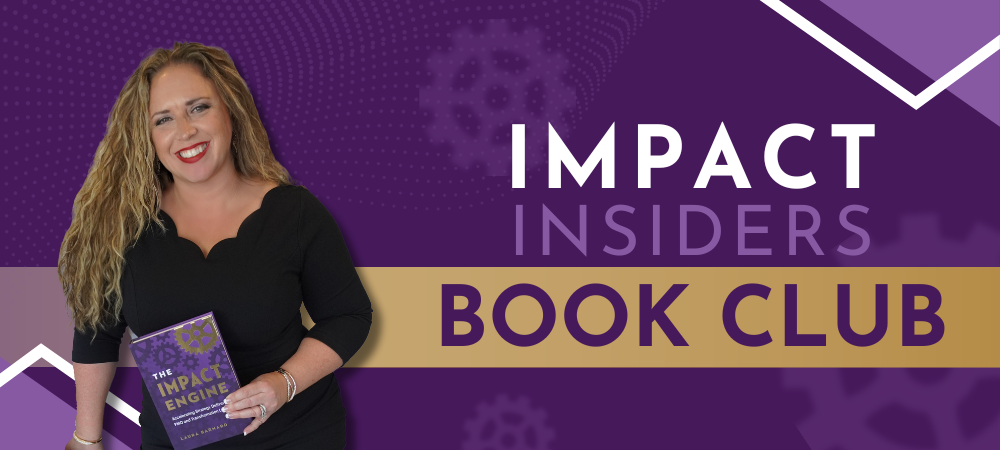
P.S. Own The IMPACT Engine? Your book is your ticket to The IMPACT Application Lab.
Inside the IMPACT Insiders Book Club, I’m hosting three free live workshops to help you move from reading the book to applying it to a real strategy delivery challenge. We’ll Map the Mess, Make Your Case, and Build Your Plan.
Your book is your ticket. Do you have yours?
Hey there, IMPACT Driver!
Thanks for taking the time to check out our podcast and blog.
I welcome your feedback and insights!
I’d love to know what you think and if you love it, please leave a rating and review in your favorite podcast player.
You can also complete this survey to tell us more about you and get my advice on how to take your next steps toward high-IMPACT!
Warmly,
Laura Barnard