
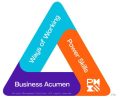
PMI Talent Triangle: Business Acumen
One of the questions I hear most often from PMO leaders is this: How do I build a PMO executives actually trust?
Sometimes the question comes from someone who has been asked to build a PMO from scratch. Other times, it comes from a leader who inherited a PMO that technically exists, but is not delivering the value leadership expected. In both cases, the concern is the same. They want to create a PMO executives will engage with, support, fund, and rely on as a trusted strategic partner.
The challenge is that many PMOs are set up to struggle before they ever launch. Not because the people leading them are not capable, but because the PMO was designed around project management process instead of business outcomes. That difference matters because executives are not looking for more templates, status reports, and governance meetings. They are looking for confidence that the organization can deliver its strategy.
That is a very different starting point.
When a PMO is built around project mechanics alone, it often becomes an administrative layer. It collects status, chases updates, manages templates, and runs meetings, but it does not necessarily help leadership make better decisions or accelerate strategic progress. When a PMO is built around business outcomes, it becomes something much more valuable. It becomes a strategy delivery capability that helps the organization focus, prioritize, execute, and realize measurable business IMPACT.
Here are six secrets to building a PMO executives will actually trust.
Secret 1: Define the business problem the PMO must solve
The first mistake many organizations make when building a PMO is starting with the structure. They ask what templates they need, what dashboard they should build, what governance meetings should be scheduled, and which tool should be implemented. Those questions may eventually matter, but they should not come first.
The better starting question is this: What business problem is this PMO supposed to solve?
That question forces a very different conversation. Many PMOs are launched because projects are late, teams are overloaded, costs are increasing, or leaders feel disconnected from delivery. But those are often symptoms. The deeper business problem may be that the organization has too many competing priorities, no clear way to evaluate trade-offs, poor visibility into capacity, slow decision-making, or initiatives that are not clearly connected to strategic goals.
If the PMO does not understand the real business problem, it will be very hard to design the right solution. It may build a beautiful dashboard that does not answer the questions executives are asking. It may create a governance process that adds more meetings but does not improve decision-making. It may implement a tool that makes the existing dysfunction move faster.
And yes, tools matter. I love a good tool. But a tool is rocket fuel under your current way of working. If the foundation is wrong, the tool will only help the organization do the wrong things faster.
A PMO executives trust starts by getting clear on the problem it exists to solve. That clarity becomes the foundation for every service, process, governance structure, and capability the PMO builds.
Secret 2: Align the PMO with strategy, not just projects
Most PMOs are positioned too late in the strategy lifecycle. They are brought in after the strategy has already been defined, after initiatives have already been approved, and after timelines have already been promised. At that point, many of the most important decisions have already been made without the PMO’s input.
That creates predictable problems. Too many initiatives are approved at once. Resources are spread too thin. Timelines are built on hope instead of capacity. Projects are launched without clear business outcomes. The PMO is then expected to make everything happen, even though the conditions for successful delivery were never created in the first place.
A strategic PMO does not simply receive projects after the fact. It supports the full strategy lifecycle, including strategy definition, strategy execution, and strategy realization. That does not mean the PMO owns the organization’s strategy. It means the PMO helps leaders design a strategy that can actually be delivered.
This is where PMO leaders can provide enormous value. They can help leadership evaluate capacity, understand trade-offs, clarify strategic priorities, stagger work appropriately, and determine which initiatives should move forward and when. They can also help leaders define what success looks like before execution begins, so teams are not just delivering outputs. They are delivering the intended business outcomes.
When the PMO is connected to strategy, executives begin to see it differently. It is no longer a team that manages project activity. It becomes a capability that helps leadership turn strategic intent into measurable progress.
Secret 3: Design PMO services that solve executive problems
Many PMOs build their services from a traditional PMO checklist. Status reporting. Templates. Project tracking. Governance documentation. Methodology support. These services can be useful, but only if they help solve the problems executives actually care about.
Executives are usually asking very different questions. Which initiatives should we prioritize? Where are our biggest resource constraints? Why do projects keep getting delayed? Which work is most critical to our strategy? Are we delivering the outcomes we expected? Where does the leadership team need to focus its attention?
If the PMO’s services do not help answer those questions, the PMO will struggle to be seen as strategic.
A PMO executives trust designs its services around leadership pain points and business outcomes. That might include portfolio visibility, prioritization support, resource coordination, risk escalation, cross-functional alignment, decision facilitation, and outcome tracking. The specific services matter less than the principle behind them. Every PMO service should help the organization make better decisions, focus on the right work, reduce friction, or improve the likelihood of delivering strategic outcomes.
This is also why copying another organization’s PMO model rarely works. A generic PMO service catalog may look complete, but it may not solve the problems your executives are facing. The PMO must be designed for the business context it serves.
That is how the PMO moves from being a process function to becoming a strategic partner.
Secret 4: Design governance that accelerates decisions
Governance is one of the most important capabilities a PMO can provide. It is also one of the easiest to overbuild.
Many PMOs unintentionally create governance structures that slow the organization down. They add approval layers, committees, status meetings, reporting requirements, and decision checkpoints. The original intent is usually good. The PMO wants structure, consistency, visibility, and accountability. But when governance becomes too heavy, it creates friction instead of clarity.
Eventually, business leaders start bypassing the process. They do not do this because they hate discipline. They do it because the process is getting in the way of progress.
The purpose of governance is not control. The purpose of governance is clarity. Good governance helps the right people make the right decisions at the right time. It creates focus, accountability, alignment, and speed. It gives executives the information they need to make trade-offs and keep strategic work moving.
Poor governance does the opposite. It delays decisions, creates confusion, encourages workarounds, and makes the PMO look like the reason progress is slow.
The PMOs executives trust are the ones that make execution easier, faster, and more aligned. They do not create governance for the sake of governance. They design governance to help the organization make better decisions and accelerate strategy delivery.
Secret 5: Build credibility through early wins
One of the biggest mistakes PMOs make is trying to build the entire operating model before delivering visible value. They spend months designing frameworks, writing process documentation, creating governance models, and preparing future-state plans. Meanwhile, executives are waiting to see whether the PMO is going to make anything better.
That is a risky position.
Trust is not built through a polished PMO vision deck. It is built when executives see the PMO solving a business problem that matters to them. That is why early wins are so important.
Instead of trying to build everything at once, focus on one meaningful leadership pain point. Improve prioritization. Clarify ownership for strategic initiatives. Resolve a resource conflict. Reduce confusion around decision rights. Help leadership focus on fewer initiatives so the organization can make faster progress.
The first win does not have to solve every problem. It needs to create evidence. Evidence builds credibility, credibility builds trust, and trust creates the executive support the PMO needs to expand its role over time.
This is why an iterative approach works so well. Build the PMO in focused cycles. Solve one important problem. Put the improvement into practice. Get feedback. Learn from it. Then move to the next highest-value opportunity.
PMO credibility grows when leaders experience the PMO helping the business move forward.
Secret 6: Think of the PMO as a system, not just a team
The most effective PMOs are not just teams of project managers. They are systems for turning strategy into results.
That is the core idea behind the IMPACT Engine System. When a PMO is designed around business outcomes, it becomes far more than a project management office. It becomes the engine that helps the organization deliver what matters most.
Organizations do not usually struggle because they lack ideas. They struggle because execution breaks down. Too many initiatives are launched at once. Priorities compete with each other. Resources are stretched beyond capacity. Decisions take too long. Progress is hard to see. Outcomes are assumed instead of measured.
The PMO has the potential to solve these problems, but only when it is designed to support the full strategy delivery process. That means helping leaders align initiatives to strategy, prioritize effectively, create governance that enables decisions, track outcomes instead of only milestones, and continuously improve how the organization delivers.
When these capabilities work together, the PMO stops being seen as administrative overhead. It becomes one of the most valuable strategic capabilities in the organization.
It becomes an IMPACT Engine.
What executives really want from the PMO
Executives do not want process for the sake of process. They want confidence that the organization is focused on the right work, making the right decisions, using resources wisely, and delivering the outcomes that matter most.
That is the real opportunity for PMO leaders today. Not just managing projects. Not just creating templates. Not just reporting status. The opportunity is to help the organization deliver strategy with greater speed, focus, alignment, and measurable business IMPACT.
If your PMO is struggling today, do not start by redesigning templates or adding more process. Start with the question that matters most:
What business problem does this PMO exist to solve?
When the purpose becomes clear, the design becomes clear. And when the design is right, executives stop asking why the PMO exists and start asking how the PMO can help more.
Press play above to learn the six secrets to building a PMO executives will actually trust.
P.S. Reading about PMO transformation is one thing. Applying it to your organization’s challenges is where real results happen. Inside the free IMPACT Insiders Book Club, I’ll guide you through the IMPACT Application Lab, a free live workshop series designed to help you identify what’s slowing down strategy delivery and create a focused action plan for change.
Learn more and join here: IMPACT Insiders Book Club