
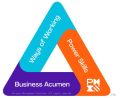
PMI Talent Triangle: Power Skills
Think about the next strategic meeting you cannot attend. Someone from your PMO has to represent the team. Do you feel confident they will connect the work to the business outcome, explain what the issue means, and help leaders make the right decision? Or are you already planning the briefing, the exact words, and the follow-up you will need to repair the conversation?
That reaction reveals more than whether one team member is ready for a meeting. It shows where the strategic capability of the PMO actually lives.
You may be doing an excellent job personally. You may have earned executive trust, learned to translate project information into business language, and become the person leaders call when the work gets messy. But when every important conversation still depends on you, the PMO has not developed the same capability across the team.
A strategic PMO cannot live inside one leader
Executives do not experience the PMO only through its leader. They experience it through the person producing the portfolio dashboard, the person facilitating governance, the person working with delivery teams, and the person coordinating change. Every one of those interactions teaches the business what the PMO is.
If one person speaks about outcomes, value, tradeoffs, and decisions while everyone else speaks about status, milestones, templates, and compliance, the business receives two different versions of the PMO. The leader may be changing the perception at the top while the rest of the team quietly reinforces the old one.
This is rarely a capability problem in the way leaders first assume. Most team members are doing what they were hired, trained, measured, and rewarded to do. If you measure them on reports being sent, fields being completed, and processes being followed, they will protect those outputs. Strategic behavior will not appear simply because you tell people to be more strategic.
The team needs the business context that makes stronger judgment possible. They need to understand where the organization is going, why an investment exists, what outcome it is meant to create, who needs that result, and how the organization will know whether the value materialized.
The bottleneck can look like strong leadership
The pattern often starts with good intentions. A team member brings you a weak update, an unresolved escalation, or a recommendation that is not ready for an executive audience. You know the relationships and the organizational context, so you step in. You rewrite the message, join the meeting, make the recommendation, and solve the problem faster.
Sometimes that is exactly what your role requires. The problem is what happens when you do it every time.
Your team learns that the moment an issue becomes bigger than a task, the thinking belongs to you. They learn to bring you problems instead of recommendations. The business learns to wait for you. When you travel, take time off, or focus on a more strategic priority, work stalls or follows you anyway.
Now the PMO’s strategic capability is concentrated in one person. You have become the bottleneck, not because your leadership is weak, but because the team has not had enough opportunity to build the judgment you use every day.
Share the destination, not just the assignment
Strategic thinking begins with context. When a new initiative enters the portfolio, do not stop at scope, schedule, governance, and the delivery process. Help your team understand the investment behind the work.
What business problem is the organization trying to solve? What is the intended outcome? What would change for the customer, employee, operation, or financial result if the work succeeds? What assumptions are leaders making? What decisions are still open? How does this initiative connect to other work across the strategy lifecycle?
Consider a project that delivers a new customer-onboarding capability. The solution goes live, the acceptance criteria are met, and the project is green. Then the business asks why customers are not getting onboarded any faster.
A project-focused answer defends the delivery. It points to the completed milestones, accepted solution, and approved scope. A strategically minded team member asks a different set of questions. Are people using the new capability? Did the process change? Was another constraint left untouched? Where is the expected outcome getting stuck? Who needs to decide what happens next?
The team member does not have to own an outcome that belongs to the business. They do need to understand why the work exists and help the right people see what the result means.
Coach the thinking with four questions
Context alone is not enough. People need practice applying it when the situation becomes uncertain, political, or urgent.
Suppose a team member tells you a sponsor has not responded, a milestone is at risk, and you need to escalate. You may be able to solve the issue with one phone call. Before you take it back, use the moment to develop the person in front of you.
Ask four questions:
- What are we trying to do? Bring the conversation back to the business outcome, not only the task or date.
- What is getting in the way? Test whether the visible issue is the real constraint. The sponsor may not be ignoring the team. The decision may be unclear, the consequence may not have been explained, or the request may not be decision-ready.
- What do you recommend? Ask the team member to use what they know. Let them explain the option, logic, risk, and next move rather than handing the problem upward.
- Who needs to make the decision? Clarify authority and identify the information that person needs to act.
These questions change the leadership move. You are no longer removing another problem from someone’s hands. You are coaching them to connect the issue to the outcome, form a recommendation, and prepare the decision.
The first answer may be incomplete. That is part of the development. Ask what led them there, what else they considered, what risk they may be missing, and what evidence would strengthen the recommendation. Give them room to think before supplying your answer.
Build a shared strategic lens across the team
A PMO does not become strategic because every person does the same job. It becomes strategic when different roles use a shared business lens.
The portfolio professional sees how a new initiative changes capacity and tradeoffs. The delivery professional notices when the plan is moving but the outcome is not. The change lead sees that adoption risk could prevent value realization. The governance facilitator recognizes when a missing field is not the real issue because leadership has avoided a decision.
When those perspectives remain isolated, each person can perform their role well while the business still receives a fragmented picture. When the team understands the destination and how the parts connect, it can combine those observations into decision support leaders can use.
That shared lens also makes the PMO stronger than any one person’s perspective. Team members are closer to different parts of the work. They may see operational barriers, stakeholder behavior, or unintended consequences that never surface in an executive meeting. Your job is to create an environment where they can connect those observations to the bigger business picture and challenge assumptions responsibly.
A strategic PMO stays strategic when you leave the room
The goal is not to make yourself unnecessary or ask every team member to act like the CEO. Decision authority still belongs where it belongs. Your role in executive conversations still matters.
The goal is to stop being the only person who can translate what is happening, connect the work to outcomes, and help leaders decide what happens next.
Choose one real issue your team is discussing in terms of status, schedule, process, or escalation. Slow the conversation down. Ask what the organization is trying to accomplish, what is truly getting in the way, what the team recommends, and who needs to decide. Do not rush to fill the silence.
Every time you coach that thinking instead of rescuing the issue, you build more of the PMO’s strategic capability into the team. Over time, the dashboard supports a decision, governance exposes the real choice, delivery stays connected to value, and your team becomes a group of IMPACT Drivers who can help the organization move even when you are not in the room.
Press play above to hear the full episode and use the four-question coaching sequence with your team.
P.S. You do not have to be the only person in your PMO learning how to think and lead this way. The IMPACT Engine ecosystem gives you three paths to build strategic capability, implement the full system, or get personalized coaching and support, depending on what you and your team need next. Explore the IMPACT Engine ecosystem and find your next step.