
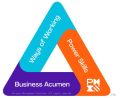
PMI Talent Triangle: Business Acumen
A PMO can be working harder than ever and still look stalled from the executive floor. The team may be building dashboards, governance, reporting, intake, prioritization, tools, and training, yet leaders are still asking the same question: What has actually improved?
That is the PMO math problem. When addition becomes the default response to every new pain point, activity rises while visible value becomes harder to find.
When more activity hides less progress
I understand why this happens. By the time an organization decides to create a PMO, hire a new leader, or rescue a function that is not working, the pain has usually been building for months or years. Executives want progress quickly. Stakeholders have a long list of problems they want fixed. The PMO leader feels responsible for proving that the investment was worth it.
Every request can sound reasonable. Better resource visibility would help. Stronger governance may be needed. Reporting could be clearer. Prioritization is probably overdue. Because you can see the value in each improvement, you add each one to the plan.
Soon the team is working on a little bit of everything. One person is developing a methodology while supporting escalations. Another is improving reporting while helping with a tool rollout. The leader is spending the day in meetings and trying to squeeze development work into nights and weekends. Progress exists, but most of it is partial.
Executives do not experience partial progress as value. They experience the original problems as still unsolved. A long list of work in motion may sound impressive, but it does not answer what is better, what the organization can do now that it could not do before, or which business outcome has changed.
Your team is not the only capacity constraint
PMO leaders usually think about how much their own team can deliver. The organization’s ability to absorb change matters just as much.
Every new PMO service asks someone else to behave differently. A new intake process changes how work enters the system. A governance model changes who decides and when. Reporting requirements ask people to provide information in a different way. A new tool asks them to learn a new workflow. Each addition consumes stakeholder attention and capacity.
Roll out several changes at once and even supportive stakeholders can become overwhelmed. They still have customers, teams, targets, and operational responsibilities. They do not exist simply to participate in PMO processes.
When adoption falls, adding more communication, training, compliance, or controls can deepen the problem. The PMO may interpret low adoption as resistance when stakeholders are reacting to an unmanageable volume of change. More effort from the PMO then creates more friction for the people the PMO is trying to help.
Subtraction is a leadership conversation
Subtraction does not mean walking into an executive meeting and announcing that half the commitments are gone. It means changing the conversation from “What else should the PMO do?” to “What is the most important business problem we need to solve now?”
That question creates the space for a second one: What can we postpone, sequence later, or remove from the immediate plan so the most important problem can actually be solved?
PMO leaders already ask the organization to make trade-offs. We explain that limited capacity cannot support every initiative as the number-one priority. We need to hold the PMO to the same standard.
This is why Instill Focus comes first in the IMPACT Driver mindset. Focus is not choosing a favorite service and ignoring everything else. It is understanding which business problem matters most to stakeholders, what is driving it, and where the PMO can create the greatest value with the capacity available.
Focus on business problems before PMO services
A service-first view encourages addition. You see weak reporting and plan a reporting service. You see resource conflicts and plan resource management. You see inconsistent decisions and plan governance. Each symptom appears to require a separate solution.
A business-problem view changes the math. Several visible problems may share the same root cause. Poor resource visibility, missed commitments, and constant escalation might all trace back to too much work entering the system without real prioritization. Addressing that root cause can improve several symptoms at once.
This is where a PMO begins to move from process provider to strategic partner. The goal is not to build everything a PMO could theoretically offer. The goal is to build what helps the organization solve the most important problem and achieve measurable business outcomes.
Build one complete MVP, not ten partial services
The minimum viable product approach gives the PMO a practical way to act on that focus. A PMO MVP is not a thin slice of every service you eventually want to provide. Ten services at 10 percent completion are still ten unfinished services.
A focused MVP addresses one meaningful business problem. It is implemented, used, tested with stakeholders, and measured closely enough to show whether it is making a difference.
In the episode, I share the story of Arjun, an IMPACT Accelerator Mastermind student who was trying to build several services while still delivering projects. He was working incredibly hard, but the volume of work kept him from making the progress he expected. His problem was not commitment or capability. He was trying to fix too many symptoms at the same time.
Once he returned to the business problems stakeholders had identified, looked beneath the symptoms, and focused on one right thing, the path became clearer. He did not need to fix the entire organization before demonstrating value. He needed one meaningful solution delivered well enough to earn credibility and support for the next move.
Let completed value create the multiplication effect
The multiplication effect begins after subtraction creates focus.
Start with one focused solution and a smaller group of stakeholders who genuinely need it. Bring them into the change process. Learn from their experience. Adjust the solution. Measure whether the business problem is improving.
When stakeholders experience a useful result, they talk about it. Early adopters become champions. Their peers begin asking how they can get the same benefit. Executives hear success described by the people receiving the value, not only by the PMO delivering the service.
That creates pull. Instead of pushing several unfinished services into the organization, the PMO has evidence, advocates, and demand. The team can enter the next focused cycle with stronger support, clearer learning, and greater credibility.
One focused solution creates results. Results create champions. Champions help expand the PMO’s IMPACT.
Use the right PMO math next
When the work begins to multiply, return to four decisions:
- Identify the business problem that matters most to stakeholders now.
- Separate the visible symptoms from the probable root cause.
- Decide what will wait, and place it on a credible roadmap rather than leaving it as an unspoken promise.
- Deliver one focused MVP, bring stakeholders through the change, and measure the outcome it creates.
The point is not to make the PMO smaller for the sake of doing less. The point is to concentrate effort where it can produce finished value, then use that value to support what comes next.
Press play above to hear the complete PMO math lesson and learn how subtraction, a focused MVP, and stakeholder champions can help you create measurable value faster.
P.S. IMPACT Engine Practitioner is live December 2, 4, 9, and 11. During these live, virtual half-day sessions, we will work through all six stages of the IMPACT Engine, apply them to a connected PMO case, and practice determining the right next move. Explore IMPACT Engine Practitioner. Enrollment closes November 20, 2026.