How PMO Leaders Crush Their Authority Without Realizing It


PMI Talent Triangle: Power Skills
There is a phrase I hear all the time from PMO leaders, transformation leaders, project managers, and delivery professionals.
It usually sounds something like this:
“The sponsor said we need to do it this way.”
“The boss wants this done.”
“Executive leadership told us this is required.”
On the surface, that language sounds responsible. It sounds aligned. It sounds like the leader is reinforcing executive support and making sure everyone understands the work matters. But there is a hidden cost most leaders do not realize until it has already started damaging their credibility.
When you constantly explain the work by pointing to the sponsor, the boss, or the executive team, you may be unintentionally giving away your own authority. You stop looking like the leader responsible for outcomes and start looking like the person passing along instructions from someone more important. That is a dangerous position for any PMO, project, or transformation leader because your role is not to be a messenger. Your role is to help the organization turn strategy into results.
What “the sponsor said” actually signals
Imagine someone on your team raises a concern about a task, deliverable, timeline, resource request, or decision. They push back and ask why something needs to happen. If your answer is, “Because the sponsor said we need to,” what message does that send?
It signals that the real authority lives somewhere else. It tells the organization that you are not the one driving the decision; you are simply carrying the message from the person who is. If that happens often enough, people learn to look past you and toward the person whose authority you keep borrowing.
That is how capable leaders unintentionally position themselves as middlemen.
The issue is not that sponsors are unimportant. They are essential. Strong sponsors help remove obstacles, make decisions, align peers, and provide the organizational influence needed to move important work forward. The problem starts when sponsor authority becomes your default explanation for why the work matters.
When that happens, you may get temporary compliance, but you do not build lasting influence. People may do the thing because the sponsor’s name was invoked, but they are not learning to trust your judgment, follow your leadership, or see you as the person who can guide the work toward business outcomes. That is the part PMO leaders cannot afford to miss.
Borrowed authority, positional authority, and business authority
There are three types of authority PMO and transformation leaders often use: borrowed authority, positional authority, and business authority.
Borrowed authority is when you rely on someone else’s title or power to move the work forward. It sounds like, “The sponsor said we have to do this.” Borrowed authority may get people to comply in the moment, but it also teaches them that the authority behind the request belongs to someone else.
Positional authority comes from your role, reporting line, governance process, or formal decision rights. This can be useful when people report directly to you or when a structure gives you defined authority. But many PMO, project, and transformation leaders are expected to influence people who do not report to them. That means positional authority will only take you so far.
Business authority is the authority that comes from connecting the work directly to the outcome the organization is trying to achieve. This is the strongest form of authority because it does not depend on hierarchy. It depends on clarity, context, business value, and ownership of the result.
Instead of saying, “The sponsor said we need this resource,” business authority sounds like this: “To deliver the outcome leadership approved for this initiative, we need this capability available by this date. If we cannot get that support, we will need to adjust expectations about what can be delivered.”
That is a very different conversation. You are not threatening anyone. You are not hiding behind hierarchy. You are connecting the request to the business outcome, the decision required, and the consequence of not making the trade-off. That is how business leaders communicate.
Why executives do not want you quoting them all the time
Executives do not want to be the person whose name gets invoked every time there is resistance. They want leaders who can drive progress when they are not in the room. They want people who can navigate organizational friction, influence stakeholders, bring clear decisions forward, and connect the work to business outcomes without needing an executive to push every action through.
When every challenge escalates to the sponsor, executives start asking a different question: Why do I need this PMO, transformation office, or project leader if I still have to be in every conversation?
That is the risk. If the only way work moves forward is through executive intervention, the PMO is not building authority. It is bypassing influence.
There will always be moments when the sponsor needs to step in. There will always be decisions that belong at the executive level. But if sponsor escalation becomes the default way work gets unstuck, the PMO leader is not strengthening their role. They are teaching the organization that they cannot move the work without someone above them providing the push.
That is not the path to credibility.
Use sponsor influence strategically
Strong sponsor engagement matters. The answer is not to stop involving sponsors or pretend their authority does not matter. The answer is to use sponsor influence strategically.
If a peer executive needs to release a critical resource, if a major priority conflict requires escalation, or if a decision truly sits above the project or PMO level, your sponsor should help. That is part of their role. But that is different from using the sponsor as the reason people should listen to you.
The better move is to own the business outcome, frame the decision clearly, and ask the sponsor to remove leadership-level constraints when needed. That positions you as the leader of the work, not the person hiding behind the sponsor. Your sponsor should reinforce the path when executive influence is required. They should not have to be the reason every stakeholder takes the work seriously.
What to say instead
The next time you catch yourself saying, “The sponsor said,” pause and ask a better question: What would this sound like if I actually owned the outcome?
Instead of saying, “The sponsor wants this done by Friday,” try, “To protect the timeline for the approved business outcome, we need this decision by Friday.” Instead of saying, “The boss said we need this resource,” try, “If this capability is not available, we need to adjust scope, timing, or expected value.” Instead of saying, “Executive leadership said this is required,” try, “This work directly supports our business goal of [insert goal], and here is what is at risk if we delay.”
That language moves you from messenger to outcome owner. It helps people understand the why behind the work. It positions you as the leader responsible for helping the organization achieve the result, not the person repeating someone else’s instructions.
This is not about becoming aggressive. It is about becoming clearer. Clarity builds authority.
The authority you build through ownership
PMO and transformation leaders often say they have all the responsibility but none of the authority. I understand why it feels that way. You may not control the resources. You may not own the budget. You may not be the executive sponsor. You may not have direct authority over the people you need to influence.
But the authority executives expect you to use is not always positional authority. It is business authority. Business authority comes from understanding the strategy, connecting the work to outcomes, framing decisions clearly, and helping the organization move forward. It is earned through how you communicate, how you lead, and how consistently you focus people on the business result.
When you stop saying “the boss said” and start communicating from the perspective of the outcome, something shifts. People stop looking past you to find the real decision maker. They start recognizing you as one.
That is how you earn your seat at the table. Not by waiting for more formal authority. Not by borrowing someone else’s authority. By leading the work from the outcome you are responsible for helping the organization deliver.
The question to ask yourself this week
Pay attention to your language this week. How often are you saying, “The sponsor wants,” “The executive team said,” or “The boss told us”?
Then ask yourself: What would this sound like if I owned the outcome?
That one question will change how you communicate. It will change the way you frame decisions. It will change how people experience your leadership. Because when you consistently speak from the perspective of business outcomes instead of hierarchy, people start seeing you differently. They stop looking past you for the real decision maker.
They start recognizing you as one.
That is how PMO and transformation leaders build authority that actually lasts.
▶️ Press play above to hear the full episode and learn how to stop crushing your authority without realizing it.
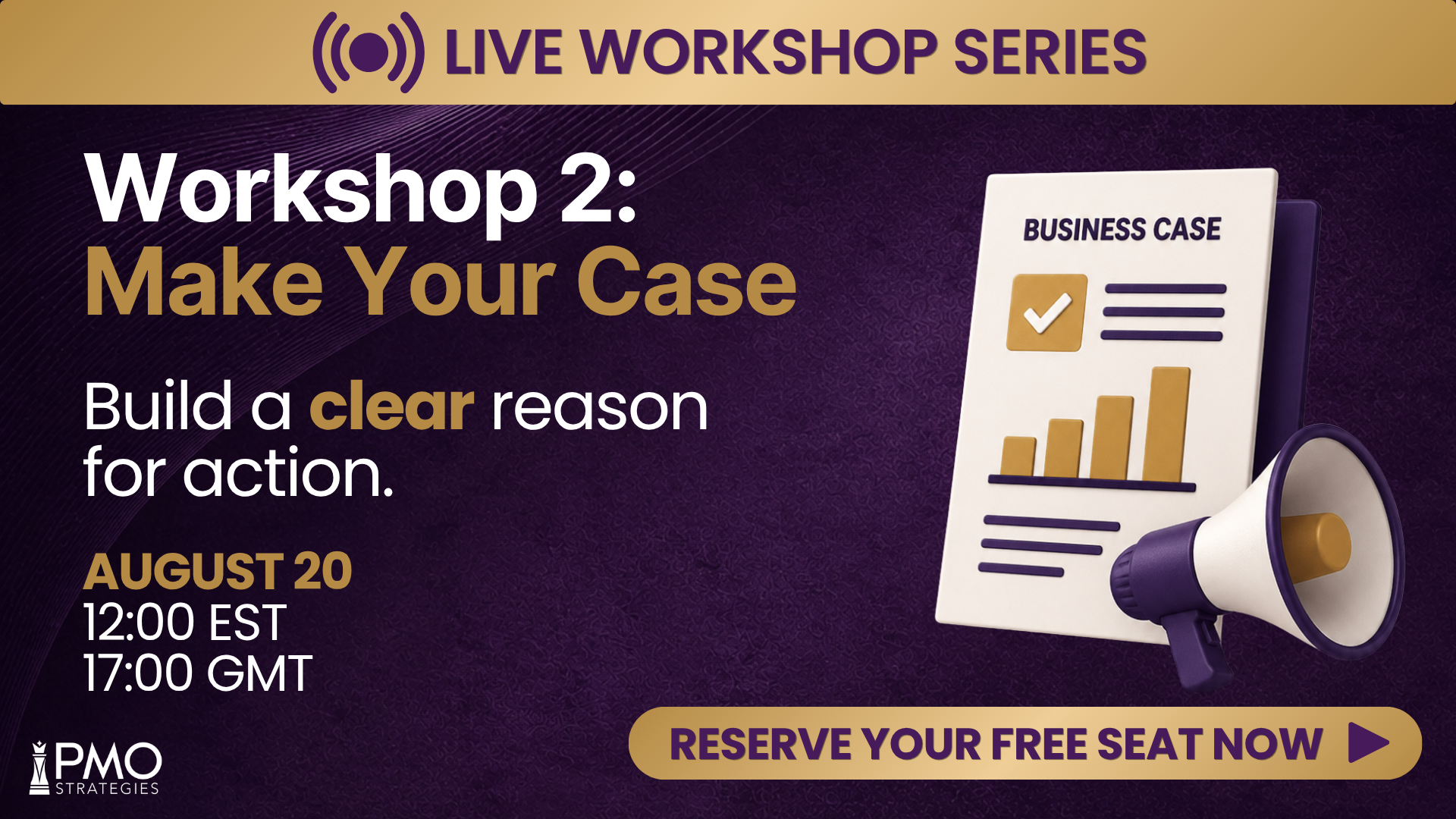
P.S. Next up in The IMPACT Application Lab is Make Your Case, where we’ll turn one real strategy delivery challenge into a leadership-ready case for change. If you own The IMPACT Engine, your book is your ticket.
Hey there, IMPACT Driver!
Thanks for taking the time to check out our podcast and blog.
I welcome your feedback and insights!
I’d love to know what you think and if you love it, please leave a rating and review in your favorite podcast player.
You can also complete this survey to tell us more about you and get my advice on how to take your next steps toward high-IMPACT!
Warmly,
Laura Barnard