

PMI Talent Triangle: Business Acumen
If your PMO has started gaining traction in the organization, you may begin hearing a familiar request:
“Can the PMO help with this too?”
At first, that request can feel like validation. It suggests that leaders see value in the work your PMO is doing. When teams ask for more support, it often means the organization is beginning to trust the structure, guidance, and visibility the PMO provides.
But expanding PMO services simply because people are asking for them can create serious challenges.
I’ve seen many PMOs expand their services with the best intentions, only to discover later that the additional work spreads their team too thin and weakens their overall IMPACT. Adding more services does not automatically increase the value your PMO delivers.
In fact, if expansion happens without the right evaluation, it can dilute your focus and reduce the quality of the services you already provide. That’s why before expanding PMO services, leaders should pause and ask four critical questions.
These questions help ensure that every service the PMO provides contributes to meaningful business outcomes and supports the organization’s strategic goals.
Why PMO Service Expansion Can Create Problems
Many PMOs expand their services reactively. A stakeholder asks for support with reporting. Another department wants help coordinating initiatives. An executive requests more oversight for project delivery. Each request appears reasonable on its own.
However, when the PMO accepts every request without a clear framework for evaluating new services, the organization begins to rely on the PMO for an increasing number of operational activities. Over time, this can shift the PMO away from strategic work and toward administrative support.
Instead of guiding transformation and helping leaders deliver strategic initiatives, the PMO becomes responsible for managing tasks that do not directly influence organizational outcomes.
When this happens, the PMO team often experiences several challenges: increased workload without additional resources, reduced quality of service delivery, confusion about the PMO’s role, and difficulty demonstrating measurable value.
Expanding services without careful consideration can unintentionally weaken the PMO’s ability to support the organization’s strategy. This is why every potential service expansion should be evaluated through a strategic lens.
Question 1: Does This Service Align with Strategic Outcomes?
The first question PMO leaders should ask is whether the proposed service directly supports the organization’s strategic objectives. If a service does not contribute to the organization’s ability to deliver key outcomes, it may not belong within the PMO.
PMOs create the greatest value when they focus on enabling strategic initiatives and helping leaders make informed decisions about priorities, resources, and progress.Services that align with strategy strengthen the PMO’s credibility and influence.
Services that do not align with strategy can distract the PMO from its most important responsibilities. Before expanding services, ask yourself: Does this work help the organization achieve its strategic goals?
If the answer is unclear, it may be worth reconsidering whether the PMO should take on the responsibility.
Question 2: Is There Real Organizational Demand?
Not every request represents a true organizational need. Sometimes a single department or stakeholder asks the PMO to provide support because they believe the PMO has the capacity or expertise to help.
However, one request does not necessarily justify creating an entirely new service. PMO leaders should evaluate whether demand exists across the organization or whether the request is isolated to a specific group.
If multiple teams consistently need the same support, that may indicate a legitimate opportunity to expand services. If the request comes from only one area, it may be better addressed through collaboration rather than formalizing a new PMO offering.
Understanding the scope of demand helps ensure the PMO invests time and resources in services that provide value across the organization.
Question 3: Does the PMO Have the Capability to Deliver This Service?
Even when a service aligns with strategy and demand exists, the PMO must consider whether the team has the capability to deliver it effectively. Capability includes skills, processes, tools, and frameworks.
Without these elements in place, a new service may be delivered inconsistently or fail to produce meaningful results.
When evaluating capability, consider questions such as: Does the team have the expertise required to provide this service? Are there clear processes to support delivery? Do we have the tools needed to manage the work effectively?
If capability gaps exist, PMO leaders may need to develop those capabilities before introducing the new service.
Question 4: Do We Have the Capacity to Sustain It?
Capacity is often the most overlooked factor in PMO service expansion. Even when a service aligns with strategy and the PMO has the capability to deliver it, the team must still have the capacity to sustain it over time. PMO teams already manage complex responsibilities, including governance, reporting, portfolio oversight, and transformation initiatives.
Adding another service without adjusting priorities or resources can stretch the team too thin. When capacity is exceeded, quality suffers and team members become overwhelmed. Sustainable growth requires thoughtful planning and realistic expectations about the workload.
Expanding PMO Services with Intention
Expanding PMO services can strengthen your influence within the organization when done thoughtfully. The key is ensuring that every service supports strategic outcomes and delivers meaningful value.
When PMO leaders evaluate new services through the lens of alignment, demand, capability, and capacity, they make more informed decisions about where to invest their time and resources. This approach helps the PMO maintain focus on the work that matters most.
🎧 Press play above to learn the four questions that will help you expand your PMO services strategically and ensure your efforts support real organizational outcomes.
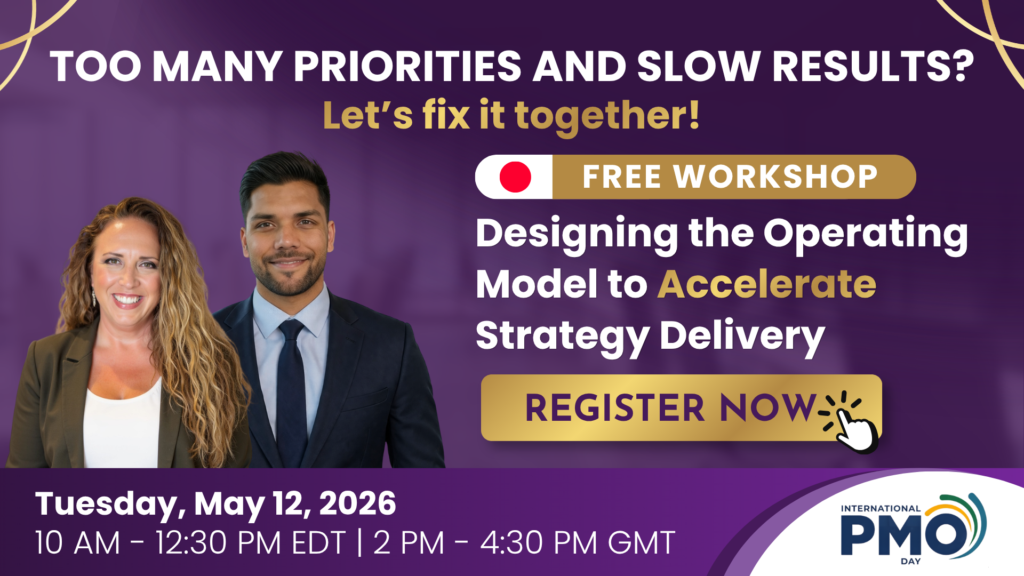
P.S. International PMO Day is May 12th. Join Laura Barnard and Alexander David for a live session on closing the strategy gap. You will see where value leaks, why decisions stall, and how to redesign work flow for measurable business IMPACT.