
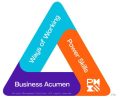
PMI Talent Triangle: Business Acumen
Executives spend much of their time thinking about where the organization should go.
They focus on outcomes such as growth targets, market positioning, customer experience, and operational performance. Those priorities shape the direction of the business.
But strategic decisions rarely happen in isolation.
Every new initiative requires resources. Every shift in priorities affects projects already in motion. And every change to the strategy portfolio alters the organization’s capacity to deliver.
This is where the PMO plays an important role.
Because the PMO operates at the intersection of strategy and execution, it has visibility that few other functions possess. It sees the initiatives underway across the organization. It sees how those initiatives interact. It sees where teams are overloaded and where dependencies exist between programs.
That perspective positions the PMO to serve as a strategic advisor.
The PMO’s Unique Perspective
Executives define direction. They determine where the organization wants to go.
The PMO sees how that direction translates into work.
It sees the programs, projects, and initiatives responsible for delivering strategic outcomes. It sees the teams assigned to those initiatives and the constraints that shape delivery.
That visibility matters.
When leadership considers launching a new initiative, the PMO understands how that work interacts with the rest of the portfolio. A new program might compete with existing initiatives for the same resources. It might introduce new dependencies. It might slow progress elsewhere.
Strategic advising begins with helping leaders understand those implications.
Strategy Is Not a Once-a-Year Event
Many organizations treat strategy as something that happens during an annual planning session.
Leadership gathers to set priorities, publish a strategic plan, and communicate direction.
But strategy decisions don’t stop once the plan is written.
Throughout the year, new opportunities appear. Market conditions change. Customers request new capabilities. Regulations evolve.
Each new situation requires a decision.
Should the organization pursue the opportunity? Should resources shift to support it? Should existing work pause to make room for something new?
The PMO helps leadership evaluate those decisions in context. Because it sees the portfolio in motion, the PMO can show how adding new initiatives affects ongoing work before those decisions create problems that are harder to solve later.
Making Tradeoffs Visible
Every strategic decision involves tradeoffs.
Starting one initiative often means delaying another. Allocating resources to one area means those resources are no longer available elsewhere. The challenge is that those tradeoffs are not always visible when initiatives are evaluated individually.
Each initiative appears to be valuable in isolation. Each executive believes their initiative supports the strategy. Often, they’re right.The problem arises when the total volume of work exceeds the organization’s capacity. Teams become overloaded. Projects compete for attention. Timelines stretch longer than expected.
The PMO helps bring clarity to these conversations by visualizing the portfolio. When leaders see the full picture, the discussion shifts from asking whether an initiative should happen to asking which initiatives matter most.
That shift is where prioritization becomes real.
Advising During Execution
Strategic advising doesn’t stop once initiatives begin.
Execution generates information that shapes the strategy. Programs reveal risks. Projects encounter obstacles. Market conditions evolve. Assumptions that seemed reasonable during planning turn out to be wrong. Because the PMO monitors delivery across the portfolio, it often sees these signals first.
That insight helps leadership respond before small issues become larger problems.
An initiative might require a pivot. A program might need additional resources. Another effort may no longer align with the organization’s priorities. And in some cases, the right decision is to stop a project entirely not because execution failed, but because the strategy it was built to support has shifted.
When the PMO surfaces those signals early, leaders have time to adjust. They can reallocate resources, reset expectations, or make the decision to pause work that no longer serves the strategy.
That kind of real-time advisory support keeps strategy connected to execution not just at the start of the year, but throughout it.
Connecting Strategy to Outcomes
Another area where the PMO can advise leadership is in evaluating results.
Many organizations close a project once implementation finishes. The system launches. The initiative is complete. The project team moves on. But project completion is not the same as strategic success.
Strategic success is measured by outcomes.
- Did the initiative improve customer experience?
- Did it increase revenue?
- Did it improve operational efficiency?
- Did it create the capabilities the organization needed?
By maintaining visibility into outcomes, the PMO helps leadership determine whether strategic investments delivered the expected results. Those insights influence future strategy decisions.
How the PMO Earns a Seat in Strategic Conversations
Strategic advising is not a role that gets assigned. It gets earned.
PMO leaders who want to influence strategy need to show up differently than PMO leaders focused solely on delivery governance. The shift requires a change in how the PMO communicates its insights.
Instead of reporting milestone completion, the PMO begins framing its perspective in terms of strategic outcomes. Instead of describing which projects are on schedule, it describes what is at risk if current execution patterns continue.That reframe changes everything.
Leaders who receive delivery status updates listen politely and move on. Leaders who receive insight about portfolio risk and strategic tradeoffs pay attention and come back for more.
The PMO earns trust by making complexity manageable. When the portfolio feels overwhelming and priorities feel unclear, the PMO brings structure to the conversation. It helps leadership see what is competing for attention, what decisions need to be made, and what the execution reality looks like behind every strategic choice.
Building Trust as a Strategic Advisor
Becoming a strategic advisor doesn’t happen overnight.
It happens gradually as leadership begins to see the value the PMO brings to decision making.
When leaders consistently receive clear insight about portfolio capacity, dependencies, and tradeoffs, they begin to involve the PMO earlier in strategic conversations.
Instead of bringing the PMO in after decisions are made, they invite the PMO into the conversation while decisions are being shaped.
That is the moment the PMO becomes a true strategic partner. The PMO doesn’t define the strategy. But it helps ensure the strategy leaders define can actually be delivered.
👉 Press play above to learn how PMO leaders can guide better strategic decisions and finally close the gap between where your organization wants to go and what it can actually deliver.
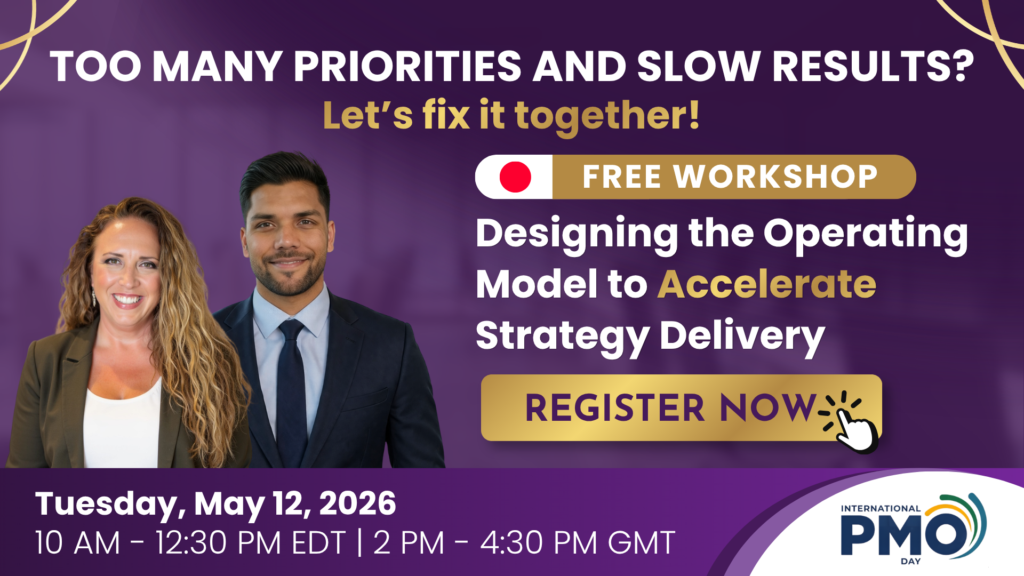
P.S. International PMO Day is May 12th. Join Laura Barnard and Alexander David for a live session on closing the strategy gap. You will see where value leaks, why decisions stall, and how to redesign work flow for measurable business IMPACT.